

Broken Bones
Overview
What Are Broken Bones and How Do They Happen?
A broken bone, also called a fracture, is when a break goes through part or all of a bone.
Most broken bones in kids happen from a fall. An accident or sports can also lead to broken bones.
Top Things to Know
- A broken bone, or fracture, happens when a bone breaks. This is usually due to falls, accidents, or sports injuries.
- Common signs include pain, swelling, bruising, and trouble moving the area.
- Casts, splints, or braces can keep the bone stable while it heals.
- Broken bones usually take a few months to heal completely.
Types of Bone Fractures
Kids' bones are more likely to bend than break completely because they're softer. Fracture types that are more common in kids include:
- greenstick fracture: a break on one side of the bone only
- buckle or torus fracture: an outward bend on one side of the bone without breaking the other side
Other kinds of bone fractures include:
- avulsion fracture: when a tendon or ligament pulls off a tiny piece of bone
- growth plate fracture: a break in the area of a child's or teen's growing bone
- stress fracture: a tiny crack in the bone
- comminuted fracture: a bone breaks into more than two pieces
- compression fracture: a collapsing of the bone
Signs & Symptoms
What Are the Signs & Symptoms of Broken Bones?
The signs of a fracture depend on the type of break and the bone affected. It always hurts to break a bone, and the pain is often very sharp or throbbing, but some fractures will have more evident symptoms than others. Here are some of the most common symptoms:
- swelling or bruising
- crooked or bent appearance
- stiffness or intense pain with movement
- numbness or tingling sensations
Get medical care right away if you notice any of the above symptoms or suspect your child has a broken bone. Broken bones need to be treated as soon as possible so the injury heals properly and doesn’t cause any serious problems.
When Should I Call 911 for a Broken Bone?
Do not move your child and call 911 right away if:
- You suspect a serious injury to the head, neck, or back.
- A broken bone comes through the skin. While you wait for help:
- Keep your child lying down.
- Do not wash the wound or push in any part that's sticking out.
How Are Broken Bones Diagnosed?
Doctors order X-rays if they think a bone is broken. An X-ray usually can show if there is a break, where it is, and the type of break.
Treatment & Home Care
How Are Broken Bones Treated?
Doctors treat most broken bones with a cast, splint, or brace. This keeps the broken bone from moving while it heals. Even broken bones that don't line up (called displaced) often will heal straight over time.
Sometimes the displaced bones are put back in place before the cast, splint, or brace is put on. This is done through a procedure called a reduction, or "setting the bone."
The two types of reductions are:
- Closed reduction. This is done in the emergency room or operating room, after the child gets medicine to ease the pain. The surgeon moves the bones back into the right position. No incision (cut) is needed.
- Open reduction. This surgery is done for a more complicated injury. It happens in the operating room under general anesthesia. The surgeon makes a cut and moves the bones into the right position. Surgical plates, screws, or wires might be used to keep the bones in place.
How Do Bones Heal?
In the first few days after a fracture, the body forms a blood clot (or hematoma ) around the broken bone. This protects the bone and delivers the cells needed for healing.
Then, an area of healing tissue forms around the broken bone. This is called a callus, and it joins the broken bones together. It's soft at first, then gets harder and stronger over the following weeks.
New bone forms in the weeks to months after a break, but full healing can take longer.
-
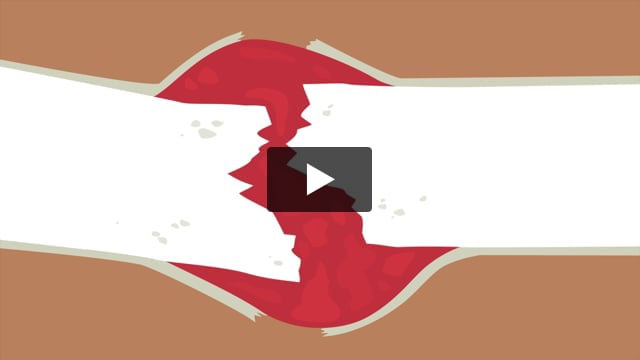
How Bones Heal
Broken bones have an amazing ability to heal, especially in children. New bone forms within a few weeks of the injury, although full healing can take longer.
Home Care
During recovery, make sure your child:
- eats a healthy diet that includes plenty of calcium and vitamin D
- takes good care of the cast or splint
- follows the doctor's directions for rest and/or doing any exercises
- goes to all follow-up care visits
After the cast or splint comes off, your child may not be ready to return to physical activities right away. The muscles may be weak or stiff, and the bone may need more time to get stronger.
Your doctor may recommend physical therapy to help with healing. Often, just time, stretching, and regular activity is enough for healing.
Risks & Prevention
Who Is More Likely to Get a Broken Bone?
Some health conditions and activities can raise the risk of broken bones, such as:
- balance disorders, which can make kids fall more often
- bone disorders that can weaken the bones, like osteogenesis imperfecta
- eating disorders, which can cause nutrient deficits that weaken bones
- high contact sports like football, ice hockey, lacrosse, and wrestling
- overuse, like repetitive stress injuries (which are common in runners)
How Can Broken Bones Be Prevented?
Not every fracture can be prevented, but to make them less likely to happen, encourage kids to:
- Build strong bones by making sure they get enough calcium, vitamin D, and physical activity.
- If your child plays a sport, make sure you have the right safety equipment.
- Make sure your child wears a helmet and protective pads when using anything with wheels, such as a bicycle or scooter.
- Use safety gates at bedroom doors and at both the top and bottom of stairs (for babies or toddlers).
- Do not use infant walkers.
What Else Should I Know?
Broken bones are a common part of childhood. With the right treatment, a broken bone usually heals well. After a few months, most children will be back to all the activities they did before the injury.
People may have signed your child’s cast or written messages on it, so your child may want it. Ask the doctor if it’s possible to keep the cast after it’s removed.