

Urinary System & Kidneys
What Are the Urinary Tract & Kidneys?
The urinary tract (or, urinary system) is one of the systems that our bodies use to get rid of waste products. Organs called the kidneys are the part of the urinary tract that makes urine (pee). Urine has salts, toxins, and water that need to be filtered out of the blood. After the kidneys make urine, it leaves the body using the rest of the urinary tract as a pathway.
Watch & Learn Together
Kids love our Chloe and Nurb videos about how the body works! Learn all about the urinary system and what it does.
-
How the Urinary System Works
Watch this movie about the urinary system, which makes pee.
Test Your Knowledge!
After watching, take this quiz to test your knowledge of the urinary system.
What Are the Parts of the Urinary Tract?
Urine is more than just that drink you had a few hours ago. The body produces pee as a way to get rid of waste and extra water that it doesn't need. Before leaving the body, urine travels through the urinary tract.
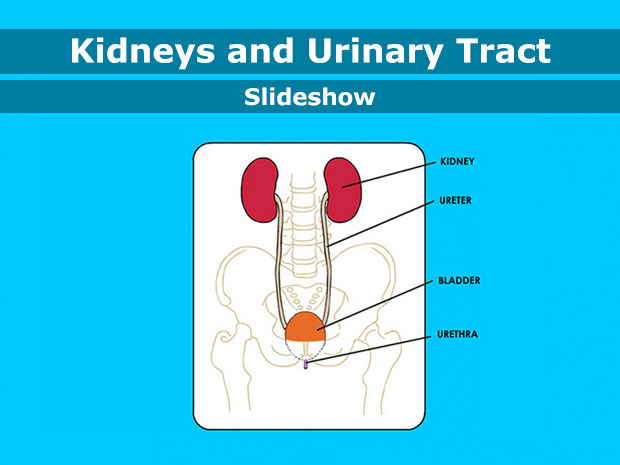
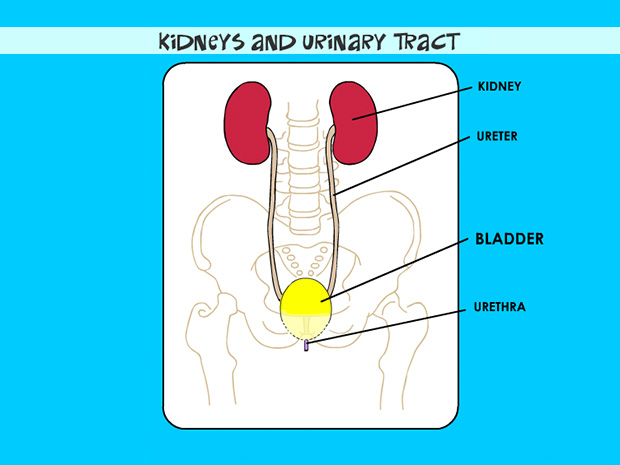
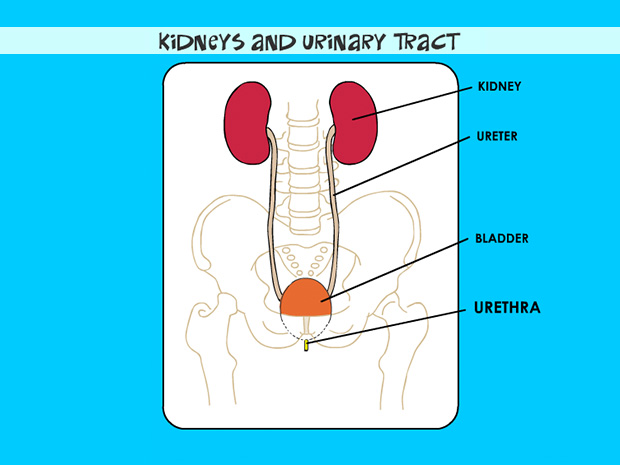
The urinary tract is a pathway that includes the:
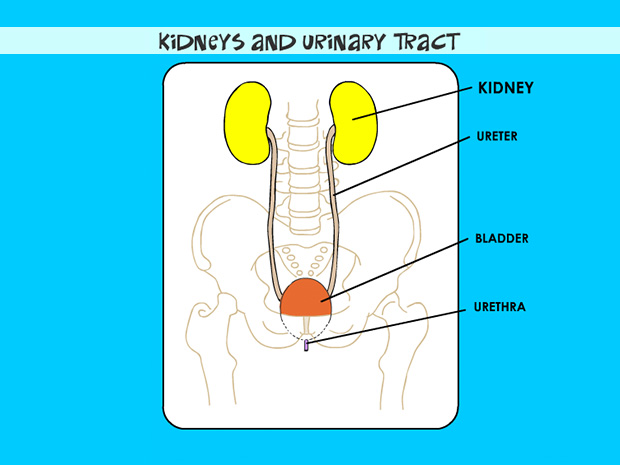
- kidneys: two bean-shaped organs that filter waste from the blood and produce urine
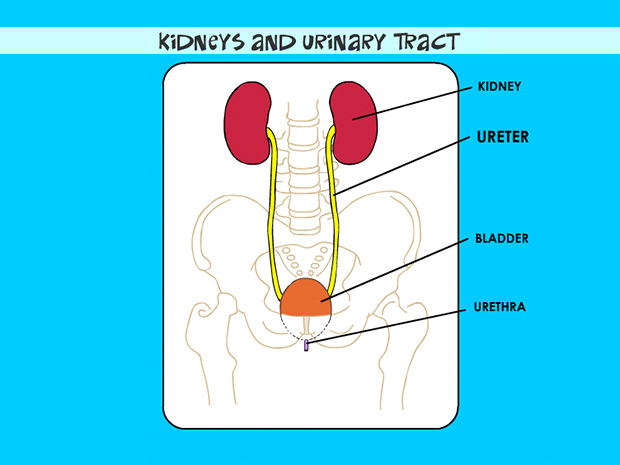
- ureters: two thin tubes that take pee from the kidneys to the bladder
- bladder: a sac that holds pee until it's time to go to the bathroom
- urethra: the tube that carries urine from the bladder out of the body when you pee
How Does Urine Leave the Body?
Urine first is made in the kidneys, which are under the ribcage in the back, one on each side. Each adult kidney is about the size of a fist. People usually have two kidneys, but can live a normal, healthy life with just one.
The anatomy of each kidney includes an outer layer called the cortex, which contains filtering units. The center part of the kidney, the medulla (meh-DUH-luh), has fan-shaped structures called pyramids. These drain urine into cup-shaped tubes called calyces (KAY-luh-seez).
From the calyces, pee travels out of the kidneys through the ureters (YUR-uh-ters) to be stored in the bladder (a muscular sac in the lower belly). When a person urinates, the pee exits the bladder and goes out of the body through the urethra (yoo-REE-thruh), another tube-like structure. The male urethra ends at the tip of the penis; the female urethra ends just in front of the vaginal opening.
What Do the Kidneys Do?
Kidneys have many jobs, from filtering blood and making pee to keeping bones healthy and making a hormone that controls the production of red blood cells.
The kidneys also help regulate blood pressure, the level of salts in the blood, and the acid-base balance (the pH) of the blood. All these functions make the kidneys essential to keeping the body working as it should.
How Do the Kidneys & Urinary Tract Work?
Blood travels to each kidney through the renal artery. The artery enters the kidney at the hilum (HY-lum), the indentation in middle of the kidney that gives it its bean shape. The artery then branches so blood can get to the nephrons (NEH-fronz) — one million tiny filtering units in each kidney that remove the harmful substances from the blood.
Each nephron contains a filter called the glomerulus (gluh-MARE-yuh-lus). The fluid that is filtered out from the blood then travels down a tiny tube-like structure called a tubule (TOO-byool). The tubule adjusts the level of salts, water, and wastes that will leave the body in the urine. Filtered blood leaves the kidney through the renal vein and flows back to the heart.
Pee drains from the tubules into a funnel-shaped chamber at the center of the kidney called the renal pelvis (REE-nul PEL-vis), then travels through the ureters to the bladder. The bladder expands as it fills. When the bladder is full, nerve endings in its wall send messages to the brain. When a person needs to pee, the bladder walls tighten and a ring-like muscle that guards the exit from the bladder to the urethra, called the sphincter (SFINK-tur), relaxes. This lets pee go into the urethra and out of the body.
What's Urine?
Let's talk more about how the kidneys filter blood. When blood goes through the kidneys, water and some of the other stuff that is in blood (like protein, glucose, and other nutrients) go back into the bloodstream, while the waste and excess stuff is taken out. Urine is what is left behind. But what is it exactly?
Urine contains:
- water
- urea, a waste product that forms when proteins are broken down
- urochrome, a pigmented blood product that gives urine its yellowish color
- salts
- creatinine, a waste product that forms with the normal breakdown of muscle
- byproducts of bile from the liver
- ammonia
When you're asked to give a urine sample during a doctor's visit, the results reveal how your two kidneys are doing. For example, white blood cells in the urine can be a sign of an infection.
Pee also is a way for your body to keep the right amount of water. Did you ever notice that if you drink a lot, you pee more and the pee is pale yellow? That's because your body is getting rid of extra water and your pee has more water in it than usual.
How Can I Help Keep My Kidneys & Urinary Tract Healthy?
To help keep your kidneys and urinary tract healthy:
- Get plenty of exercise.
- Eat a nutritious diet.
- Stay hydrated.
- For girls: Wipe from front to back after pooping so germs don't get into the urethra.
- Avoid bubble baths, sitting in the tub after shampoo has been used, and scented soaps. These can irritate the urethra.
- Wear cotton underwear.
- Promptly change out of wet bathing suits.
- Go for regular medical checkups.
- Talk to your doctor before taking any supplements or herbal treatments.
- Let the doctor know about any family history of kidney problems, diabetes, or high blood pressure.
- Let the doctor know if you have any swelling or puffiness, have pain with peeing, need to pee often, have foamy urine or blood in the urine, or are constipated.