

High Blood Pressure (Hypertension)
Overview
What Is High Blood Pressure?
High blood pressure, or hypertension, is when the force of the blood pushing on the blood vessel walls is too high. When someone has high blood pressure, the:
- heart has to pump harder
- arteries (blood vessels that carry the blood away from the heart) are under greater strain as they carry blood
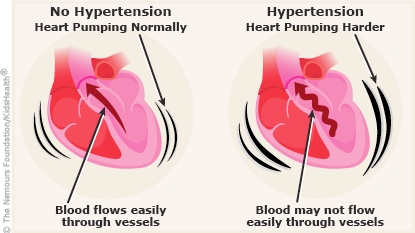
After a while, high blood pressure can damage the heart, brain, kidneys, and eyes. Finding and treating high blood pressure early can help kids be healthy, now and in the future.
How Does Blood Pressure Work?
Blood pressure is the force against blood vessel walls as the heart pumps blood. When the heart squeezes and pushes blood into the vessels, blood pressure goes up. It comes down when the heart relaxes.
Blood pressure changes from minute to minute. It's affected by activity and rest, body temperature, diet, emotions, posture, and medicines.
Signs & Symptoms
What Are the Signs & Symptoms of High Blood Pressure?
Most of the time high blood pressure doesn't cause symptoms. In rare cases, severe high blood pressure can cause headaches, blurry vision, dizziness, nosebleeds, a fluttering or racing heartbeat, and nausea.
When to Call a Doctor
If your child has high blood pressure and gets any symptoms of high blood pressure, get medical care right away. Call 911 for chest pain, sudden weakness, trouble breathing, or any severe symptoms.
Causes
What Causes High Blood Pressure?
The most common type of high blood pressure is called primary hypertension. This means that no other medical problem is found that is causing high blood pressure. Primary hypertension is more common in people who are overweight or obese, and those who have high blood pressure in their family.
When a medical problem is found that is causing high blood pressure, it is called secondary hypertension.
Secondary hypertension often is due to:
- kidney disease
- hormone problems
- blood vessel problems
- lung problems
- heart problems
- some medicines
Diagnosis
How Is Blood Pressure Measured?
Healthcare providers measure blood pressure with a cuff that wraps around the upper arm, or the leg in babies. When the cuff inflates, it squeezes a large artery, stopping the blood flow for a moment. Blood pressure is measured as air is slowly let out of the cuff, which lets blood flow through the artery again.
Blood pressure is measured in two numbers. The pressure when the:
- heart pumps
- heart rests between beats
You hear blood pressure reported as the first number "over" the second number, like 120 over 80, or 120/80.
How Is High Blood Pressure Diagnosed?
Diagnosing high blood pressure in kids can be tricky because there aren't always symptoms and blood pressure can vary from day to day. Sometimes it can take several blood pressure checks to find out a child has high blood pressure.
Often, kids' blood pressure will be higher when they are nervous. So, healthcare providers usually check blood pressure on a few different visits. Then, they use an average of those measurements.
For kids who are anxious and keep having high blood pressure at the doctor's office, blood pressure may be measured somewhere else, like at home or by the school nurse. Sometimes doctors use a test called ambulatory blood pressure monitoring. The child wears a blood pressure cuff for a whole day and night. This can give better information than blood pressure tests in the doctor's office because kids keep doing their usual activities, including sleep.
Treatment & Care
How Is High Blood Pressure Treated?
If high blood pressure is due to a condition like kidney disease or a hormone problem, treating the condition might be enough to get the blood pressure back to normal.
Doctors often recommend lifestyle changes for kids with hypertension, such as:
Eating a healthy diet:
- Eat more fruits, vegetables, and low-fat dairy.
- Limit salt.
- Avoid caffeine (found in sodas, tea, coffee, and energy drinks).
- Avoid alcohol.
Getting regular exercise for 30–60 minutes at least 3–5 times a week. Kids with severe hypertension should check with the doctor to see which sports and activities are safe. Some might not be allowed until their blood pressure is better controlled.
People with high blood pressure should not smoke, and their home and car should be smoke-free.
If diet and exercise changes do not improve the blood pressure, doctors may prescribe medicine.
What Else Should I Know?
Even though kids with high blood pressure generally feel fine, it's important to follow the advice of the healthcare team. A healthy diet and exercise, giving medicine if needed, and getting regular blood pressure checks can help healthy kids grow into healthy adults.