

Birth Control: IUDs
What Is an Intrauterine Device (IUD)?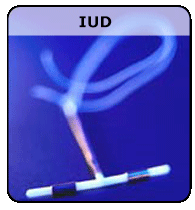
An intrauterine device (IUD) is a piece of T-shaped plastic, about the size of a quarter, that is placed inside the uterus to prevent pregnancy. Two types of IUDs are available: one is covered with copper, the other releases the hormone progestin.
How Does an IUD Work?
The copper-coated IUD prevents pregnancy by not allowing the sperm to fertilize the egg. It may also make it harder for a fertilized egg to implant in the uterus.
An IUD coated with progestin works in a similar way, but also thickens the cervical mucus and thins the uterine lining. In some cases, it stops ovulation (the release of an egg during the monthly cycle). This prevents sperm from fertilizing the egg and implanting.
A progestin IUD also can be used to help reduce blood flow for girls who have heavy or painful periods.
How Well Does an IUD Work to Prevent Pregnancy?
Both types of IUDs are very effective at preventing pregnancy. Over the course of a year, fewer than 1 out of 100 typical couples using an IUD will have an accidental pregnancy.
The copper IUD is effective as soon as it is put in and lasts up to 10 years. Progestin IUDs can work for 3 to 6 years, depending on the brand. This makes the IUD a good option for women who are not ready to start a family. Even though an IUD can stay in place for a long time, the doctor or nurse practitioner can remove it at any time.
Does an IUD Help Prevent STDs?
No. The IUD does not protect against sexually transmitted diseases (STDs). Couples who are having sex must always use condoms along with the IUD to protect against STDs.
A doctor or nurse practitioner will check to be sure a woman doesn't have any STDs before putting in an IUD. Getting an IUD put in while she has an STD could lead to pelvic inflammatory disease (PID).
Abstinence (not having sex) is the only method that always prevents pregnancy and STDs.
Are There Any Problems With an IUD?
The most common side effects of the IUD include:
- irregular bleeding for the first few months
- with the copper IUD, heavier periods with more cramps
- lighter and shorter periods (or no periods) with some kinds of progestin IUDs
- PMS-like symptoms such as moodiness, headaches, acne, nausea, and breast tenderness with the hormonal IUD
Rare problems include:
Expulsion. An IUD can come out of the uterus by accident (called "expulsion"). Sometimes a woman doesn't know this has happened. If an IUD comes even part of the way out, it does not protect against pregnancy. After someone has an IUD inserted, she'll need to go back for a follow-up visit to check that the IUD is properly in place.
Perforation of the uterus. There's an extremely small risk that an IUD might push through the wall of the uterus while it is being put in.
Pelvic inflammatory disease (PID). There's a very low risk of infection from bacteria getting into the uterus during IUD insertion. Most such infections happen in the first 20 days after placement of the IUD.
Who Is an IUD Right for?
IUDs are a good birth control option for many people, but aren't recommended for someone:
- with PID or an active STD infection
- who is already pregnant or may be pregnant
- who has problems with her uterus, like a disease or malformation, or has abnormal bleeding
Experts recommend IUDs as a good birth control option for younger adults and teens because they last for many years, need no daily care, and are very effective at preventing pregnancy.
Where Are IUDs Available?
An IUD must be inserted by a doctor or nurse practitioner. This can be done at the doctor's office, or at a health clinic, like Planned Parenthood. It can be inserted anytime during a menstrual cycle as long as there's no existing pregnancy.
How Is an IUD Put In?
The doctor or nurse practitioner puts the IUD in through the vagina, past the cervix, and into the uterus. This only takes a few minutes from start to finish. People usually feel some cramping during the placement, but it gets better within a few minutes.
Taking it easy for the rest of the day, using a heating pad, and taking over-the-counter pain medicine can help with any discomfort after the IUD is placed.
How Much Does It Cost?
The cost of an IUD can vary depending on the health insurance plan and the type of IUD. Many health insurance plans cover the costs, and family planning clinics (such as Planned Parenthood) may charge less, particularly for teens and young adults.
Because an IUD lasts for many years, the cost works out to about the same as monthly birth control methods, such as the Pill or ring.
When Should I Call the Doctor?
Someone with an IUD should call the doctor if they:
- might be pregnant
- notices a chance in the length of the IUD string
- has a change in the smell or color of vaginal discharge
- has lasting cramping or pain
- has unexplained fever or chills
- has belly or pelvic pain
- has pain during sex
- has heavy or long-lasting vaginal bleeding