

Sever Disease (Calcaneal Apophysitis)
Overview
What Is Sever Disease?
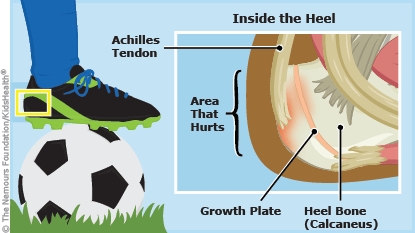
Sever disease is a swelling and irritation of the growth plate in the heel. The growth plate is a layer of cartilage near the end of a bone where most of the bone's growth happens. It is weaker and more at risk for injury than the rest of the bone.
With proper management, Sever disease usually goes away within a few months and doesn't cause lasting problems.
Top Things to Know
- Sever disease is when the heel’s growth plate becomes swollen and sore.
- Symptoms can include heel pain, swelling, redness, stiffness, and limping.
- Rest, along with ice, pain medicine, and shoe inserts, may help kids feel better.
- Stretching, supportive shoes, and icing after activity can help prevent the condition from returning.
Signs & Symptoms
What Are the Signs & Symptoms of Sever Disease?
Sever disease usually causes pain or tenderness in one or both heels. It also can lead to:
- swelling and redness in the heel
- stiffness in the feet when first waking up
- limping, or walking on tiptoes
- pain when the heel is squeezed on both sides
Symptoms are usually worse during or after activity and get better with rest.
Causes
What Causes Sever Disease?
Sever disease happens during the growth spurt of puberty. During a growth spurt, the bones, muscles, and tendons grow at different rates. The muscles and tendons can become tight, pulling on the growth plate in the heel. Activities and sports pull on the tight muscles and tendons, injuring the growth plate. This injury leads to the pain of Sever disease.
Less often, Sever disease can happen from standing too long, which puts constant pressure on the heel.
Who Gets Sever Disease?
Sever disease usually happens in kids who are:
- in their growth spurt (usually 9–14 years old)
- active in sports or activities that involve a lot of running or jumping, especially on hard surfaces (such as basketball, gymnastics, and track)
Diagnosis
How Is Sever Disease Diagnosed?
To diagnose Sever disease, healthcare providers:
- ask about a child's physical activities
- do an exam, paying special attention to the heel
Usually no testing is needed. Although Sever disease can't be seen on X-rays, healthcare providers sometimes order them to check for other problems.
Treatment & Care
How Is Sever Disease Treated?
A child with Sever disease needs to cut down or avoid all activities that cause pain. Walking and non-weight bearing exercises (like swimming) are usually OK.
If your child has Sever disease, your healthcare provider may recommend doing some or all of these:
- Put ice or a cold pack on the heel every 1–2 hours, for 15 minutes at a time. (Put a towel over the skin to protect it from the cold.)
- Give medicine for pain such as ibuprofen (Advil, Motrin, or a store brand) or acetaminophen (Tylenol or a store brand). Follow the directions that come with the medicine for how much to give and how often to give it.
- Use gel heel cups or supportive shoe inserts to decrease the stress on the heel.
- Wear shoes that are open in the back so the heel is not irritated.
- Use an elastic wrap or compression stocking to help with pain and swelling.
- Try physical therapy (PT) or a home exercise program given to you by the healthcare provider to help with stretching and strengthening.
- Wear a walking boot that limits the movement of the ankle/heel.
Sometimes a short leg cast is put on for about a week if symptoms:
- are severe
- don't go away with a few weeks of rest and treatment
Can Kids With Sever Disease Still Do Sports?
Kids can go back to sports when the activity does not cause any pain.
Looking Ahead
With rest, Sever disease usually gets better within two weeks to two months. Most kids can do all of the sports and activities that they did before.
After healing, your child can help prevent Sever disease from coming back by:
- wearing shoes and sneakers that fit well and have padded soles
- avoiding heavy or high-heeled shoes
- doing stretches before and after activity and sports
- putting ice on the heel for 15 minutes after activity and sports (with a towel over the skin to protect it from the cold)
- using special shoe inserts
- losing weight (if overweight)
Usually by age 15, the growth plate is finished growing. After that, your child won't get Sever disease again.