

Poison Ivy
Overview
What Is Poison Ivy?
Poison ivy is a plant that can cause an itchy rash when touched. Poison ivy, poison oak, and poison sumac all contain urushiol (yoo-ROO-shee-ol), a sticky, colorless, odorless oil. Urushiol is not poisonous. It's considered an allergen because it causes an allergic reaction in most people who touch it.
Top Things to Know
- Poison ivy is a kind of plant that can cause an allergic reaction, usually a rash.
- The rash often causes itching, blisters, and swelling, and may look like streaks on the skin.
- Washing skin right away and using cool compresses or anti-itch treatments can help kids feel better.
- Teach kids what poison ivy looks like and where it grows so they can try to avoid it.
Signs & Symptoms
What Are the Signs & Symptoms of Poison Ivy?
The allergic reaction to poison ivy includes a rash with blisters, itching, and sometimes swelling. The rash can look like straight lines if the plant brushed against the skin that way.
After a few days, the oozing blisters become crusty and start to flake off. The rash from poison ivy can start within hours of contact or as much as five days later. It may take two to three weeks to heal.
When Should I Call the Doctor?
Call your doctor if your child has any kind of rash, especially with a fever. Home treatment can manage most poison ivy/oak/sumac rashes. But get medical care if the skin looks infected (with increasing redness, warmth, pain, swelling or pus) or the rash:
- covers a large part of the body
- is on the face or genitals
- gets worse despite home treatment
Is Poison Ivy Contagious?
The poison ivy rash itself isn't contagious. Fluid from a blister can't spread the rash. But it is possible to get a rash from poison ivy without touching a plant. Urushiol can transfer from one person to another from their skin or clothing. Kids also can pick it up from anything that's been in contact with the oil, including pets. Urushiol can even travel through the air if someone burns the plants to clear brush.
Prevention
How Can I Protect My Child From Poison Ivy?
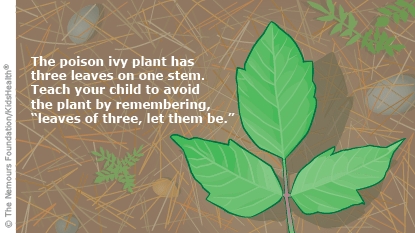
Poison ivy can grow anywhere — from forests to backyards. And it's hard to identify: The leaves of poison ivy plants blend right in with other plants and brush. Plus, there are several types of poison ivy, and each one can look different depending on the time of year.
The leaves of poison ivy plants release urushiol when they're bumped, torn, or brushed against. When the oil is released, the leaves may look shiny or have black spots. Then, it easily can get on skin.
These tips can help kids avoid getting a rash from poison ivy:
- Teach them how to identify poison ivy, oak, and sumac, so they can steer clear of them (they should be especially careful of plants if the leaves look shiny).
- Tell them to avoid areas where you know there's poison ivy.
- Have them wear long sleeves and long pants when in areas where poison ivy might grow.
- If your kids touch urushiol oil, have them wash it off their skin right away by taking a shower and using lots of soap. Don't give kids a bath — the oil can get in the bath water and spread to other areas of the body.
- If your dog might have touched poison ivy, wash it with pet shampoo to remove any urushiol oil that may be on its fur.
Treatment & Care
How Is Poison Ivy Treated?
If your child comes into contact with poison ivy/oak/sumac:
- Remove and wash any clothing that touched the plant.
- Gently wash your child's skin and scrub under fingernails right away with soap and cool water.
- Cut fingernails short to keep your child from breaking the skin when scratching. Broken skin can let bacteria in, causing infection.
- Place cool compresses on the skin as needed.
Itch Relief
For itching:
- Add oatmeal to a bath — only after your child has taken a shower to wash off all the urushiol.
- Use calamine lotion on the skin (but not on the face or on the genitals).
Bedtime Tips
For nighttime help: If your doctor recommends it, give your child an over-the-counter oral antihistamine (Benadryl or a store brand). This can give temporary help with the itching, and it can make your child drowsy and better able to ignore nighttime itching. Make sure to follow the dosing directions carefully.
More Serious Cases
For more severe cases, doctors sometimes prescribe pills or creams with steroids (not the same type of steroids that bodybuilders use) to decrease itching and redness. If the skin looks infected, the doctor may prescribe antibiotics.