

Adrenal Insufficiency
Overview
What Is Adrenal Insufficiency?
Adrenal insufficiency happens when the adrenal glands make fewer hormones than they should. This can cause:
- weakness
- tiredness
- belly pain
- loss of appetite
- nausea
- dehydration
- skin changes
Some people with adrenal insufficiency have no symptoms unless they're exposed to stress.
What Are the Adrenal Glands?
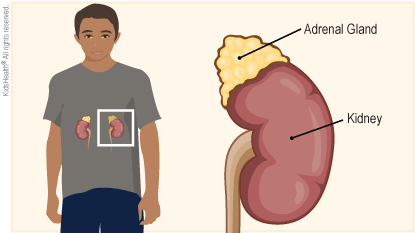
There are two adrenal (eh-DREE-nul) glands, which sit above the kidneys. They make important hormones that:
- help the body handle stress
- control blood pressure
- balance salt levels
Top Things to Know
- Adrenal insufficiency is a condition where the body does not make enough adrenal hormones.
- Kids may have tiredness, weakness, belly pain, nausea, poor appetite, or dehydration.
- Treatment includes taking hormone medicine and extra medicine during illness or stress.
- Adrenal insufficiency can cause a life-threatening adrenal crisis, so emergency treatment may be needed.
Signs & Symptoms
What Are the Signs & Symptoms of Adrenal Insufficiency?
Kids with adrenal insufficiency may have:
- tiredness
- weakness
- belly pain
- nausea
- poor appetite
- dehydration
- skin changes
Some children have few or no symptoms until their body is under stress from an illness, injury, or surgery.
What Is an Adrenal Crisis?
Sometimes, symptoms can suddenly become much worse, usually when someone is stressed by illness or injury. This is called an adrenal crisis. It needs medical treatment right away. Someone having an adrenal crisis needs to go to the hospital for IV (given into a vein) fluids and further doses of corticosteroids.
Signs of an adrenal crisis can include:
- vomiting
- belly pain
- severe weakness
- sweating a lot
- confusion
- loss of consciousness
Kids and teens with adrenal insufficiency should always:
- wear a medical alert ID
- have injectable steroid with them and all caregivers should learn how to use it
When Should I Call the Doctor?
Call the doctor if your child:
- has trouble taking the prescribed medicines
- develops signs of an infection, such as a fever, cough, or diarrhea and vomiting
- has a situation that will cause stress in the body, such as an injury or needing surgery
When Should I Call 911?
If your child shows signs of an adrenal crisis, give the injectable steroid and call 911 right away.
Causes
What Causes Adrenal Insufficiency?
There are two types of adrenal insufficiency.
Primary Adrenal Insufficiency (Addison Disease)
In primary adrenal insufficiency, also known as Addison disease, the adrenal glands either are damaged or have a genetic problem. They don't make enough of the hormone cortisol. Sometimes, they also don't make enough of the hormone aldosterone, which helps control salt balance in the body.
Central Adrenal Insufficiency
In central adrenal insufficiency, the pituitary gland in the brain doesn't make enough of adrenocorticotropic hormone (ACTH), which triggers cortisol production in the adrenal glands.
Temporary Adrenal Insufficiency
There's also a temporary type of adrenal insufficiency. This can happen if someone is being treated with high doses of cortisol-like medicines, such as prednisone, and the medicine is suddenly decreased or stopped.
Diagnosis
How Is Adrenal Insufficiency Diagnosed?
Doctors diagnose adrenal insufficiency with blood tests to check hormone levels. They also might order:
- ACTH stimulation test to see how the body responds to an injection of adrenocorticotropic hormone
- magnetic resonance imaging (MRI) to check the size and shape of the pituitary gland
Treatment & Care
How Is Adrenal Insufficiency Treated?
Doctors treat adrenal insufficiency by giving replacement hormones. They might prescribe:
- corticosteroid taken by mouth several times a day to replace cortisol
- medicine called fludrocortisone taken by mouth to replace aldosterone and balance the body's levels of salt and fluids
Corticosteroid doses often need to increase during times of illness or stress.
Talk to your doctor if you have questions about your child's treatment.