

Acanthosis Nigricans (AN)
Overview
What Is Acanthosis Nigricans?
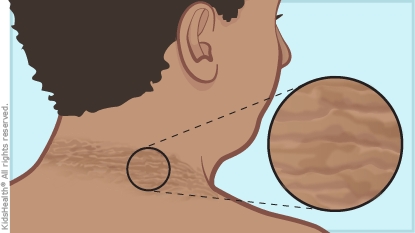
Acanthosis nigricans (ah-kan-THO-sis NY-gruh-kans) is a skin condition. It causes thicker and darker patches or streaks, usually in skin creases and folds, such as the sides and back of the neck, armpits, elbow pits, and groin. But it can show up anywhere on the body. It may look velvety or warty, or have a dirty appearance.
Top Things to Know
- Acanthosis nigricans is a skin condition that causes darker, thicker areas of skin, often in body folds.
- It usually appears on the neck, armpits, or groin and may look bumpy or velvety.
- Treating the health condition that causes it can help the skin patches fade or disappear.
- The skin may look dirty, but scrubbing won't make the condition go away.
Signs & Symptoms
What Are the Signs & Symptoms of Acanthosis Nigricans?
Acanthosis nigricans appears gradually with dark, velvety patches of skin in body creases and folds, usually in the neck, armpits, or groin. It can be found on other parts of the body, including the face, chest, elbows, knees, and knuckles. Children may have mild itching, but this is uncommon.
Causes
What Causes Acanthosis Nigricans?
Acanthosis nigricans most often is caused by high blood insulin levels, a condition called insulin resistance. Insulin resistance is seen in kids who are overweight or obese and makes them more likely to develop type 2 diabetes. It is also linked with other endocrine conditions, such as polyendocrine metabolic ovarian syndrome (PMOS).
In some cases, acanthosis nigricans can be hereditary (passed on to a child by the parents) or part of a genetic syndrome. It can be caused by medicines, such as oral contraceptives or steroids. Acanthosis nigricans can be a warning sign of some types of cancers, but this is very rare in children.
Diagnosis
How Is Acanthosis Nigricans Diagnosed?
Doctors can diagnose acanthosis nigricans by looking at the affected skin. The doctor may order blood tests to look for diabetes or other conditions associated with it.
Treatment & Care
How Is Acanthosis Nigricans Treated?
Treating the underlying cause of acanthosis nigricans can make the dark patches of skin fade or disappear. This can mean stopping any medicine that’s causing the problem or treating diabetes and other health conditions.
If your child is overweight, losing weight will help acanthosis nigricans fade. Talk to your doctor before putting your child on a diet.
To help kids feel better about how their skin looks, doctors may prescribe creams or lotions that can help lighten the skin. But acanthosis nigricans usually doesn’t need any treatment.
What Else Should I Know?
Skin areas with acanthosis nigricans can look dirty, but they’re not. Scrubbing the skin does not help and can irritate it. Gently clean the skin and don’t use bleaches, skin scrubs, or over-the-counter exfoliating treatments.
- Eating a healthy diet and getting regular physical activity can help lower insulin levels and improve skin appearance. Try these tips:
- Choose whole grains and plenty of fruits and vegetables.
- Offer water or low-fat milk instead of soda, juice, or other sugary drinks.
- Limit highly processed foods, fatty foods, and sugary treats.
- Encourage your child to be physically active every day.