

Pregnancy at 3 Weeks: Weekly Calendar
What’s Happening in My Body?
Even though you may not feel pregnant yet, you have a baby growing and developing inside you!

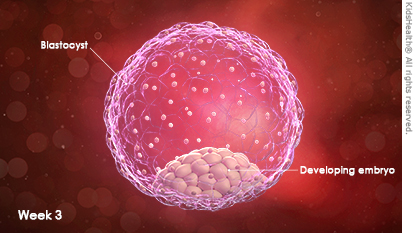
Your baby was just conceived but already is working overtime. The fertilized egg goes through a process of cell division. About 30 hours after fertilization, it divides into two cells, then four cells, then eight, and continues to divide as it moves from the fallopian tube to the uterus. By the time it gets to the uterus, this group of cells looks like a tiny ball and is called a morula.
The morula becomes hollow and fills with fluid — it is then known as a blastocyst. The cells inside clump together to become an embryo.
Understanding Implantation During Week 3
Near the end of this week, the blastocyst will attach itself to the endometrium, the lining of the uterus. This is called implantation.
Implantation creates a very important link. The lining of the uterus gives the growing embryo nutrients and takes away its waste. Over time, this area will grow into the placenta, a large disc-shaped structure that will carry oxygen and nutrition from the mother’s blood to the baby during pregnancy.
What Is My Baby’s Size at 3 Weeks?
At this stage, an embryo is very small and about the size of vanilla bean seed. It looks more like a collection of cells than a baby at this time.
Your Body When You’re 3 Weeks Pregnant
Pregnancy Symptoms at 3 Weeks
Most women won’t feel any signs of pregnancy at this time. Symptoms like breast tenderness, bloating, mood swings, and fatigue usually arrive a little later at about 5 weeks of pregnancy, or after your first missed period.
Important Appointments to Schedule
Good prenatal care is crucial for your health and your baby’s health. This medical care is provided before and during pregnancy, at childbirth, and right after your baby is born. If you haven’t already, be sure to schedule your first prenatal visit, which usually happens near the end of the first trimester.
If your pregnancy is considered high-risk (for example, if you are older than 35 or have a history of pregnancy complications), your doctor may want to see you as early as possible and more often during your pregnancy.
If you do not already have an obstetrician (a doctor who cares for you during pregnancy), this is a good time to find one. Ask your primary care doctor for names of doctors, and you can ask for recommendations from friends and family who have recently given birth. You can also use the “find a provider” tool by calling your insurance plan or checking its website, or by checking the website of your local hospital or health system.
Nutrients You Need
Now’s the time to make sure you and your baby are getting important nutrients like folic acid, protein, calcium, and iron. These nutrients are important for fetal development. Taking prenatal vitamins is a great way to ensure you get these nutrients, though the best source is by eating the right foods.
Be sure to get enough of these nutrients:
- Folic acid through a supplement. This helps prevent defects of the neural tube (the structure that gives rise to the brain and spinal cord), which forms very early in pregnancy.
- Protein, which is used to create new tissue for both mom and baby. You need to eat more protein during pregnancy. Foods high in protein that are safe in pregnancy include beans, peas, lean meats and poultry, nuts and seeds, tofu, and cooked fish. Avoid deli meats.
- Calcium. This aids the development of the baby’s bones and teeth, so make sure you're getting a good dose of dairy products, leafy green vegetables, and legumes (beans, peas, lentils, etc.).
- Iron. This supports your baby's increasing blood volume. Good sources of iron include red meat, legumes, eggs, and leafy green vegetables.
- Vitamin C. This helps with the healing of wounds, and improves development of a baby’s teeth and bones. Fruits and vegetables like oranges, strawberries, lemons, kiwi, and peppers are good sources of vitamin C.
Tips for this Week
This is a good time to look at your lifestyle and see if you can make improvements that could help keep you and your baby healthy.
Also, try to get some additional zzzz’s, so you’re well rested. Stay active and get exercise, but be sure to check with your doctor before starting any new or more vigorous exercise routine.