

During the first weeks of life your newborn may seem to do little more than eat, sleep, cry, and provide dirty diapers for you to clean up. But in reality, all of your infant's senses are functioning already, taking in the sights, sounds, and smells of this new world.
It's hard for us to know exactly what a newborn is feeling - but if you pay close attention to your baby's responses to light, noise, and touch, you can see his or her complex senses beginning to come alive.
Sight
Your new baby can see best at a distance of only 8 to 14 inches, and focus when gazing up from the arms of Mom or Dad. Your newborn can see things further away, but it is harder to focus on distant objects. Still, the light shining in from a faraway window may catch your infant's eye.
After human faces, brightness and movement are the things a newborn likes to look at best. Even a crude line drawing of two eyes, a nose, and a mouth may keep your infant's attention if held close enough. Although your baby's sight is functioning, it still needs some fine tuning, especially when it comes to focusing far off. Your baby's eyes may even seem to cross or diverge (go "wall-eyed") briefly. This is normal, and your newborn's eye muscles will strengthen and mature during the next few months.
Your newborn is better equipped to see contrasting colors than closely related hues. Black-and-white pictures or toys will keep your baby's interest far longer than objects or pictures with lots of similar colors. It's a good idea to give your infant lots of interesting sights to look at, but don't overdo it. One item at a time is plenty. And don't forget to move your infant around a bit during the day to provide a needed change of scenery.
Hearing
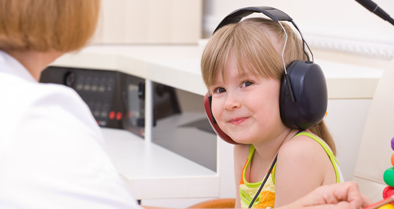
Your newborn has been hearing sounds since way back in the womb. Mother's heartbeat, the gurgles of her digestive system, and even the external sounds of her voice and the voices of other family members have been part of your baby's world for a while now. Once your baby is born, the sounds of the outside world come in loud and clear. Your baby may startle at the unexpected bark of a dog close by or seem to be soothed by the gentle whirring of the clothes dryer or the hum of the vacuum cleaner.
Try to pay attention to how your newborn responds to your voice. Human voices, especially Mom's and Dad's, are a baby's favorite "music." Your infant already knows that this is where care comes from: food, warmth, touch. If your infant is crying in the bassinet, see how quickly your approaching voice quiets him or her down. See how closely your baby listens when you are talking in loving tones. Your infant may not yet coordinate looking and listening, but even if your infant stares into the distance, that doesn't mean that he or she isn't paying close attention to your voice as you speak.
Taste and Smell
We assume newborns can smell because we know they can taste, and these are the two most closely related of the human senses. Research shows that new babies prefer sweet tastes from birth and will choose to suck on bottles of heavily sweetened water but will turn away or cry if given something bitter or sour to taste. In the first 6 months, your infant will get needed nutrition from breast milk or formula and then will start "solid" baby foods. Because infants like sweeter flavors, it is sometimes easier to get a baby started on the sweeter vegetables, like carrots or sweet potatoes. As your infant matures, you will want to expose him or her to different tastes and flavors so that he or she develops a liking for a variety of foods.
Think of the world of smells an ordinary day affords your newborn: your clothes, dinner cooking on the stove, flowers in the yard. And at this point at least, you don't have to worry too much about your baby's taste buds. Breast milk (the best!) or formula will satisfy your newborn completely!
Touch
As it is to most humans, touch is extremely important to your newborn. Through touch, your baby learns a lot about surroundings. At first, your baby is looking only for comfort. Having come from a warm and enveloping fluid before birth, your baby will be faced with feeling cold for the first time, brushing up against the hardness of the crib, feeling the scratch of a rough seam inside clothes. Your infant will be looking to parents to provide the soft touch he or she needs: silky blankets, comforting hugs, and loving caresses. With almost every touch your newborn is learning about life, so provide lots of tender kisses and your infant will find the world is a soothing place to be.
Should I Be Concerned?
If you just want a little reassurance that your baby's senses are working well, you can do some unscientific testing for yourself. Hold a small light just out of your baby's direct line of vision, about a foot away from his or her face. Your baby should turn to look at the light. Don't be too worried if it doesn't hold his or her attention for too long - even a brief look at the light indicates that he or she is seeing it. In just 4 to 8 weeks, your newborn baby's eyes will begin to follow a moving light.
If your baby's eyes seem to cross more than just briefly, be sure to tell your baby's doctor. Usually no intervention is necessary, but medical correction sometimes will be required. Also tell the doctor if your baby's eyes appear cloudy or filmy, or if they appear to wander in circles as they attempt to focus.
Most newborns will startle if surprised by a loud noise nearby. If you want to check that your baby is hearing, you can make a sharp noise while standing behind your baby. Your baby should jump a little - but if he or she doesn't, don't worry. It may mean your baby was concentrating on something else and had "tuned out" the real world at that moment. Just try the noise test again later. There are other ways to rest assured your baby is hearing well. Does crying stop once he or she hears your voice? Does your baby respond to soft lullabies or other music? Do sounds made out of sight capture your baby's attention?
If you have any concerns about your newborn's ability to see or hear, talk to your baby's doctor immediately. Even newborns can be tested using sophisticated equipment, if necessary. The sooner a potential problem is caught, the better it can be treated.
Reviewed by: Barbara P. Homeier, MD
Date reviewed: September 2005
Originally reviewed by: Steven Dowshen, MD