
Female Reproductive System
What Is Reproduction?
Reproduction is the process by which organisms make more organisms like themselves. But even though the reproductive system is essential to keeping a species alive, unlike other body systems, it's not essential to keeping an individual alive.
Human Reproduction Basics
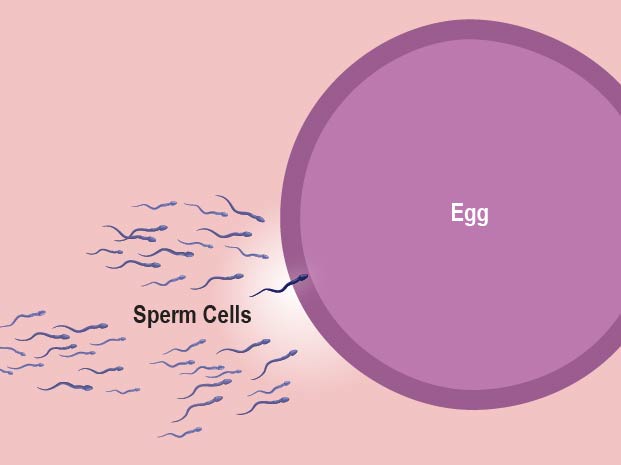
In the human reproductive process, two kinds of sex cells, or gametes (pronounced: GAH-meetz), are involved. The male gamete, or sperm, and the female gamete, the egg or ovum, meet in the female's reproductive system. When sperm fertilizes (meets) an egg, this fertilized egg is called a zygote (pronounced: ZYE-goat). The zygote goes through a process of becoming an embryo and developing into a fetus.
The female reproductive system and male reproductive system are both needed for reproduction.
Humans, like other organisms, pass some characteristics of themselves to the next generation. We do this through our genes, the special carriers of human traits. The genes that parents pass along are what make their children similar to others in their family, but also what make each child unique. These genes come from the male's sperm and the female's egg.
What Is the Female Reproductive System?
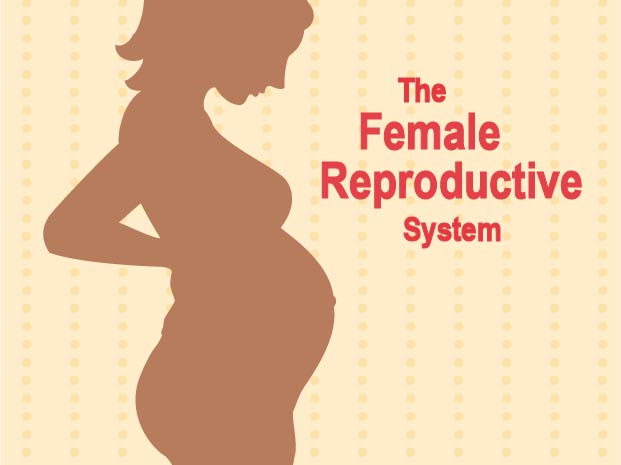
The female reproductive system is made up of the parts that are inside and outside the body that help a female make a baby. It works together with the male reproductive system to do this.
The female reproductive system also lets the body menstruate (have periods) and grow into a sexually mature female by making sex hormones.
What Are the Parts of the Female Reproductive System?
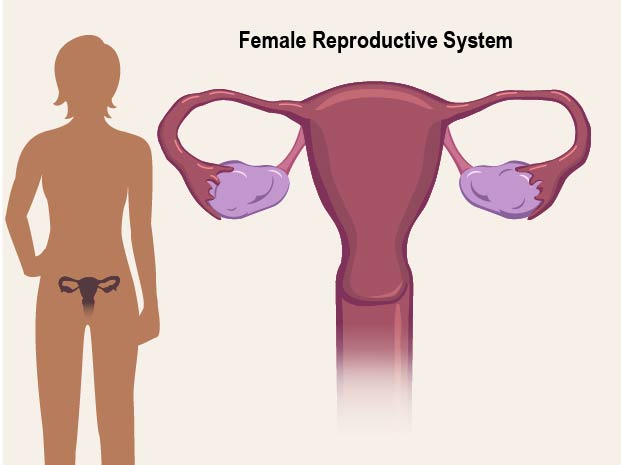
The female reproductive system has parts, called organs, inside and outside the lower belly and pelvis.
Inside Parts of the Female Reproductive System
When learning about female anatomy, it helps to start with the inside parts of the reproductive system.
Vagina
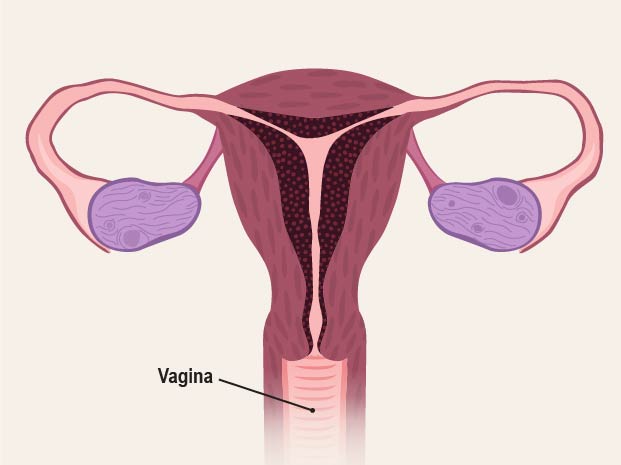
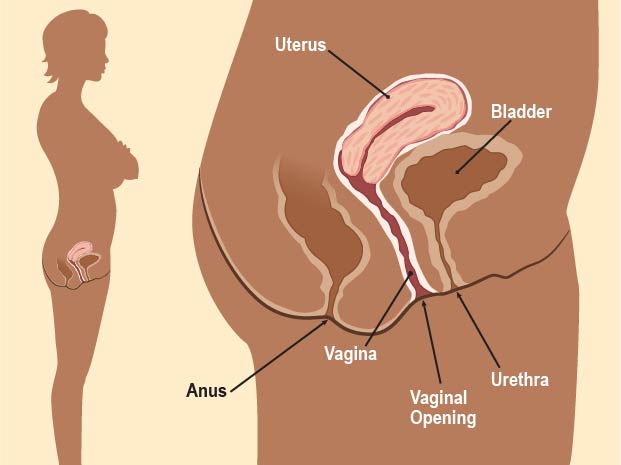
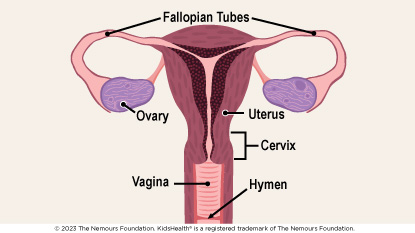
The vagina is a hollow tube that links the uterus (womb) to the outside of the body. The vagina is how menstrual blood leaves the body during periods. It’s also where the penis is inserted during vaginal sex.
The vagina’s walls have muscles, letting it get narrower or wider to fit a tampon or a baby as it leaves the body during childbirth. The walls are lined with mucous (pronounced: MYOO-kus) membranes to keep them protected and moist.
Hymen
The hymen is a very thin piece of skin-like tissue that partly covers the opening of the vagina. Most hymens stretch or tear after having vaginal sex for the first time. There may be a bit of blood and a little pain. Some hymens don’t change much after sex, and some become stretched even before having it.
Cervix
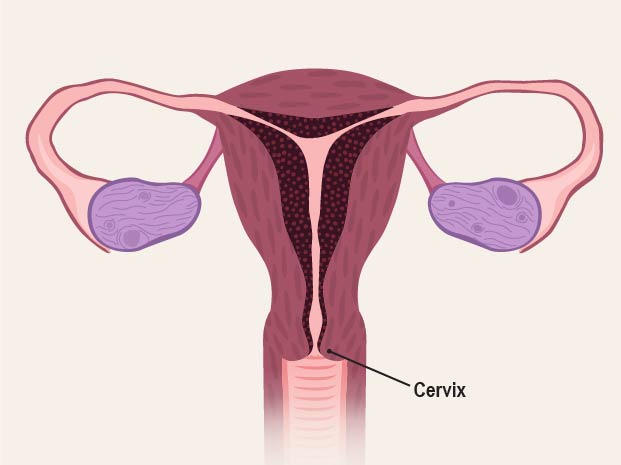
The cervix is where the vagina and uterus join. The opening of the cervix is very small (no wider than a straw), which is why a tampon can never get lost inside a female’s body. During childbirth, the cervix widens to let the baby pass through.
Uterus
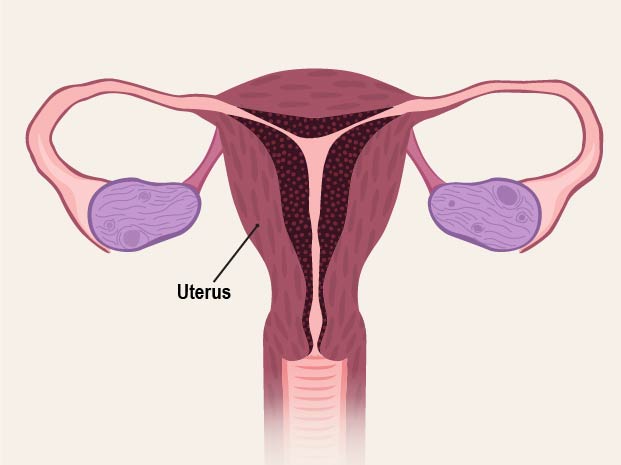
The uterus is an organ where a baby grows during pregnancy. The uterus is shaped like an upside-down pear and has walls made of muscles. The walls can expand to fit a growing fetus and then tighten to help push the baby out during labor. When a female isn't pregnant, the uterus is only about 3 inches (7.5 centimeters) long and 2 inches (5 centimeters) wide.
Fallopian Tubes
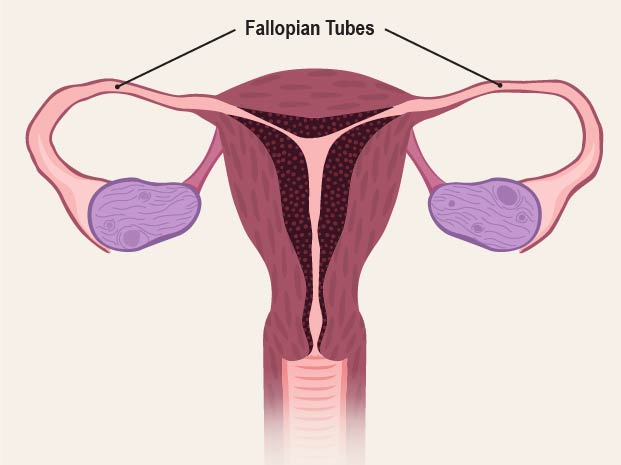
There are two fallopian (pronounced: fuh-LO-pee-un) tubes, which are attached to the upper corners of the uterus, linking it to the ovaries. Within each tube is a tiny passageway no wider than a sewing needle. At the other end of each fallopian tube is a fringed area that looks like a funnel. This fringed area wraps around the ovary but doesn't completely attach to it.
Ovaries
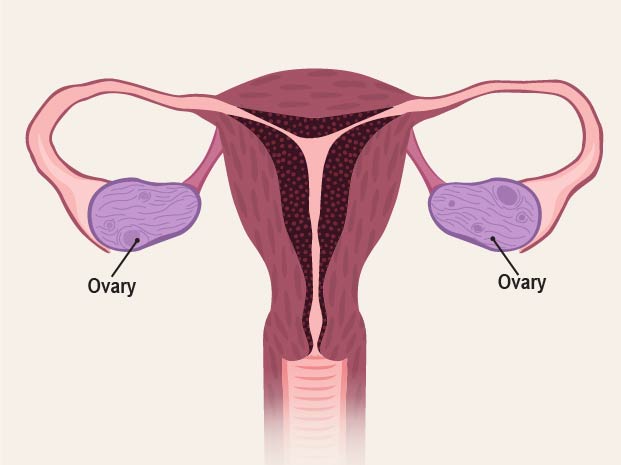
The ovaries (pronounced: OH-vuh-reez) are two oval-shaped organs located to the upper right and left of the uterus. The ovaries make, store, and release eggs into the fallopian tubes during a time called ovulation (pronounced: av-yoo-LAY-shun). When an egg comes out of an ovary, it enters a fallopian tube where tiny hairs in the tube's lining help move the egg to the uterus.
The ovaries are also part of the endocrine system because they produce sex hormones like estrogen (pronounced: ESS-truh-jun) and progesterone (pronounced: pro-JESS-tuh-rone).
The ovaries are sometimes called gonads. In males, the gonads are the testicles.
Outside Parts of the Female Reproductive System
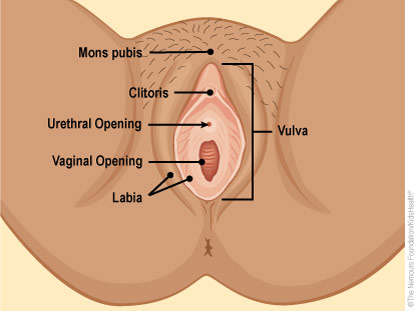
- Vaginal opening. This is the opening to the vagina.
- Urethral opening. This is the opening to the urethra, the tube that carries pee from the bladder to the outside of the body.
- Vulva. This is the area between the legs that covers the opening to the vagina and other reproductive organs inside the body.
- Mons pubis. This fleshy area has pubic hair after puberty. It's shaped like an upside-down triangle and covers the pubic bones, which make up part of the pelvis.
- Labia. These two pairs of skin flaps (the inner and outer labia) surround the openings to the vagina and urethra. After puberty, the outer labia are also covered by pubic hair.
- Clitoris. This is a small sensory organ with many nerve endings. It’s near the front of the vulva where the folds of the labia join.
How Does the Female Reproductive System Work?
Females are born with ovaries that have hundreds of thousands of eggs. When puberty starts, a gland in the brain called the pituitary gland starts making hormones. They tell the ovaries to make female sex hormones like estrogen, which help girls develop into sexually mature females.
Near the end of puberty, the body starts releasing eggs each month during a period. About once a month, during ovulation, an ovary sends an egg into a fallopian tube.
What Is a Period?
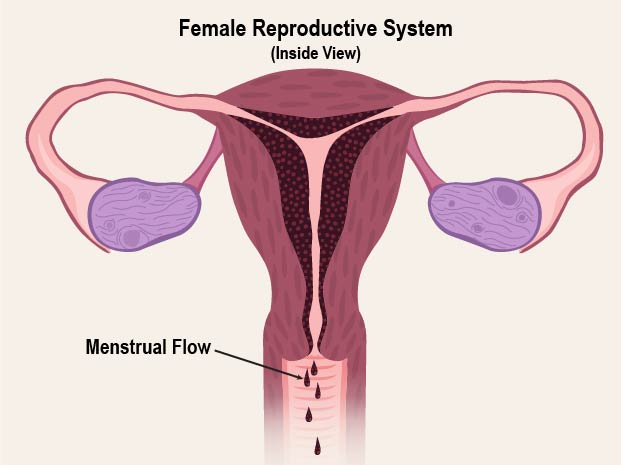
If a sperm doesn’t fertilize the egg while in the fallopian tube, the egg leaves the body about two weeks later through the uterus. Blood and tissues from the inner lining of the uterus combine to form the menstrual flow (period), which usually lasts about three to seven days. The first period is called menarche (pronounced: MEH-nar-kee).
It's common to have some mood and body changes before or during a period. This is called premenstrual syndrome (PMS). It can include signs and symptoms like:
- headaches
- mood changes, like depression or irritability
- trouble concentrating or handling stress
- bloating
- sore breasts or backaches
- tiredness
- acne
- upset stomach, constipation, or diarrhea
- food cravings
PMS usually goes away two to three days after a period starts.
Dull or sharp belly cramps are also common during the first few days of a period. They’re due to prostaglandins, chemicals in the body that make the muscles of the uterus tighten up. It can take up to two years from the first period to have a regular menstrual cycle. During that time, the body is adjusting to the hormones puberty brings. The monthly cycle for an adult female is usually about 28 days, but the range is from 21 to 35 days.
What Happens in Pregnancy?
If a female and male have sex within days of ovulation and a sperm fertilizes an egg, pregnancy happens. Here are the stages an egg goes through to become a baby.
Fertilization
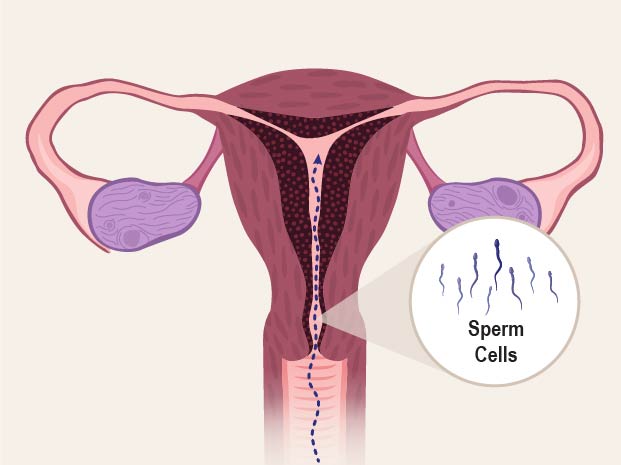
When the male ejaculates (semen leaves the penis), semen goes into the vagina. Millions of sperm are in this small amount of semen. They "swim" up from the vagina through the cervix and uterus to meet the egg in a fallopian tube. It takes only one sperm to fertilize the egg. If sperm fertilize the egg, it’s then called a zygote.
Blastocyst Stage
About five to six days later, the cells in the zygote grow in number and form a hollow ball with fluid inside. This is called a blastocyst (pronounced: BLAS-tuh-sist), and it’s about the size of a pinhead.
The blastocyst burrows into the lining of the uterus, called the endometrium (pronounced: en-doh-MEE-tree-um). To get the lining ready, the hormones estrogen and progesterone make it thick and rich with blood. This helps the blastocyst attach to the uterus and get nutrients from it. This process is called implantation.
Embryonic Stage
Now the inner cells of the blastocyst form a flattened circle called the embryonic disk. This will grow into a baby. The outer cells become thin membranes that form around the baby. The inner and outer cells multiply thousands of times and move to new spots to become an embryo (pronounced: EM-bree-oh).
After about eight weeks, the embryo is about the size of a raspberry. Almost all its parts — like the brain, nerves, heart, blood, stomach, intestines, muscles, and skin — have formed.
Fetal Stage
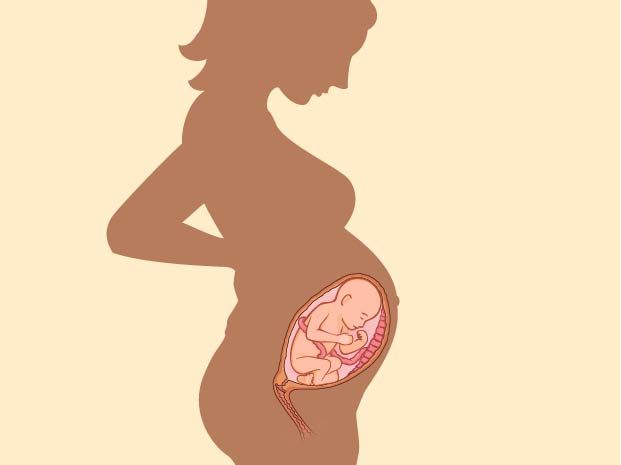
This stage lasts from nine weeks after fertilization to birth. Cells keep growing in number, moving, and changing. The embryo is now a fetus (pronounced: FEE-tis). It floats in amniotic (pronounced: am-nee-AH-tik) fluid inside something called the amniotic sac. The fluid and sac cushion the fetus against bumps to the mother's body.
The fetus gets oxygen and nutrition from the mother's blood through the placenta (pronounced: pluh-SEN-tuh). This structure is shaped like a disk, and it sticks to the inner lining of the uterus. The placenta and fetus are connected by the umbilical (pronounced: um-BIL-ih-kul) cord.
Start of Labor
Pregnancy lasts around 280 days (about nine months). When the baby is ready for birth, its head presses on the cervix, which begins to relax and widen. This helps the baby pass into and through the vagina. A plug made of mucus that has formed in the cervix now loosens. The amniotic sac tears, so amniotic fluid (and the mucus plug) come out of the vagina. This is called water breaking.
Labor
The hormone oxytocin (pronounced: ahk-see-TOE-sin) causes the walls of the uterus to contract (tighten and loosen). The contractions make the cervix thin and begin to dilate or open. After many hours, the cervix opens enough for the baby to come through. The baby is pushed out of the uterus, through the cervix, and along the birth canal (vagina). The baby's head usually comes first.
The umbilical cord also comes out with the baby. Doctors clamp the cord shut and cut it close to the navel (belly button) after the baby is delivered.
Afterbirth
The placenta pulls away from the inner lining of the uterus. Contractions push it out through the vagina along with its membranes and fluids. All this is called the afterbirth, and it’s the last stage of the birth process.