

Hyperthyroidism & Graves Disease
Overview
What Is the Thyroid?
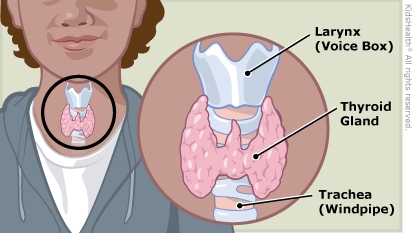
The thyroid is a small gland below the skin and muscles at the front of the neck, at the spot where a bow tie would rest.
It is soft, brownish red, and weighs less than an ounce. Its two halves (lobes) look like a butterfly’s wings and each lobe is about the size of the end of the thumb. You can actually see the thyroid gland move up and down in the front of your neck when you swallow. The thyroid is small, but it is powerful and helps the body do many important things like grow, make heat, and to develop normally.
What Is Hyperthyroidism?
Thyroid hormone is important for health, but too much thyroid hormone can make you sick. Hyperthyroidism (high thyroid hormone levels) makes the body use up energy too fast and can make you feel overheated. It can make your heart beat too fast and your hands shake. Hyperthyroidism can also cause you to feel more nervous and make it harder to get to sleep.
Top Things to Know
- Hyperthyroidism means the body is working too fast because of too much thyroid hormone. The most common cause is Graves disease.
- Symptoms of hyperthyroidism can include feeling nervous, irritable, and sweating more.
- Medicine is the most common treatment for hyperthyroidism and Graves disease.
- We don’t know why people get Graves disease, but it tends to run in families.
Signs & Symptoms of Hyperthyroidism
What Are the Signs & Symptoms of Hyperthyroidism?
High thyroid hormone levels (hyperthyroidism) can cause:
- nervousness
- irritability
- increased sweating
- bulging eyes
- trouble sleeping
- fast heartbeat
- irregular periods
- weight loss
Sometimes the thyroid gland grows and forms a bulge in the neck called a goiter.
Treatment & Care of Hyperthyroidism
How Is Hyperthyroidism Treated?
Medicines and other techniques can effectively treat hyperthyroidism. It's important to work with an endocrinologist (a doctor who specializes in hormone problems) or another doctor who knows how to treat thyroid conditions.
Causes of Hyperthyroidism
What Causes Hyperthyroidism?
The three main causes of hyperthyroidism are:
1. Graves Disease
Graves disease is the most common cause of hyperthyroidism in kids. It happens when the body creates antibodies that make the thyroid gland overactive. Antibodies usually help the body fight infection, but these antibodies stop the body from controlling the thyroid gland correctly (like a car without brakes). As a result, the thyroid hormone levels in the blood can get very high. Doctors don't know why the body starts making these antibodies. Graves disease can affect health for the rest of a person's life. So it's important to get medical treatment to control it.
2. Thyroid Gland Inflammation
Thyroid gland inflammation (thyroiditis) causes the thyroid gland to leak too much thyroid hormone into the blood. Thyroiditis can be caused by a lot of things — for example:
- getting hit in the neck
- infections
- autoimmune diseases (like Hashimoto thyroiditis)
Hyperthyroidism from thyroiditis usually lasts for a few months and then gets better on its own. The thyroid usually recovers, but sometimes it’s damaged and can't work normally again. This causes hypothyroidism (low thyroid hormone levels).
3. Thyroid Nodules
Thyroid nodules are growths in the thyroid gland. They can sometimes make large amounts of thyroid hormones, causing symptoms of hyperthyroidism. Overactive thyroid nodules are usually large (an inch or more in size) and can be big enough to feel in the neck. Most overactive thyroid nodules are benign (not cancerous) and are treated with surgery.
Signs & Symptoms of Graves Disease
What Are the Signs & Symptoms of Graves Disease?
Kids and teens with Graves disease might:
- be more tired than usual
- have lots of trouble sleeping
- lose weight
- have a faster than normal heart beat
- notice their hands shake (called tremor)
- have a lot of trouble focusing
Females with Graves disease sometimes notice that they have fewer (or less regular) periods. Over time, many people notice that their thyroid glands are enlarged.
Eye Problems
Some people with Graves disease have trouble with their eyes — itching, burning, redness, and sometimes trouble seeing normally. Sometimes they feel pressure behind the eyes, feel their eyes bulging, or see double. This is because the antibodies that make the thyroid overactive also cause inflammation and swelling behind the eyes. When this happens, it's called Graves eye disease.
Diagnosis of Graves Disease
How Is Graves Disease Diagnosed?
Graves disease is diagnosed based on a visit with a doctor who will review the symptoms, examine your child, and check lab tests. The lab tests are important because many symptoms of hyperthyroidism can be due to other reasons. It’s sometimes necessary to use imaging tests, like a thyroid scan or ultrasound.
Treatment & Care of Graves Disease
Antithyroid Medicines
Doctors usually treat Graves disease with antithyroid medicines, like methimazole. These medicines slow the release of thyroid hormones from the gland. They usually bring hormone levels down to normal within a couple of months. Thyroid hormone levels will increase again if the medicine is stopped.
Many people with Graves disease need to take antithyroid medicines for a long time to manage the condition — sometimes for the rest of their lives.
Some people decide not to use antithyroid medicines. There are two other treatment options: radioactive iodine treatment and surgery.
Radioactive Iodine
Radioactive iodine (RAI) is a permanent treatment for Graves disease. RAI damages the thyroid gland so that it can't make too much thyroid hormone. This doesn't harm other parts of the body. The RAI treatment is taken in capsules or mixed with a glass of water. The thyroid gland quickly absorbs the RAI from the bloodstream and, within a few months, the gland shrinks and symptoms slowly disappear.
Surgery
Surgery to remove most of the thyroid gland is called a thyroidectomy. It's done in a hospital under general anesthesia, so the person is asleep and feels nothing. A small incision (cut) in the lower central part of the neck usually leaves a thin scar. It's common to have some pain for a few days after the surgery, but most people feel much better within a few days.
After RAI Treatment or Surgery
After treatment for hyperthyroidism, hormone production often slows down to hypothyroid (underactive) levels. So the person needs to take a thyroid hormone supplement tablet (for example, levothyroxine) each day. This treatment is a lot easier to manage than taking pills to control the hyperthyroidism — fewer blood tests, doctor visits, and medicine changes are needed.
As the body adjusts to the hormone replacement tablets, a doctor may increase or reduce the dosage until the levels of thyroid hormone are normal. When the doctor finds the proper dosage, people usually feel well and free of symptoms. The doctor will continue to check hormone levels to make sure the dosage is right, especially for growing teens whose levels might change over just a few months.
What Else Should I Know?
Doctors don't know why people develop Graves disease, but it’s more common in some families. With good medical help, kids and teens can be healthy and do all the things their peers can do.
Graves eye disease can develop at any time in someone who has Graves disease. Smoke can make this eye disease much worse, so it's very important to not smoke and to avoid secondhand smoke.
Females with Graves disease need to be very careful to keep their hormone levels in balance. Uncontrolled thyroid hormone levels while pregnant can lead to problems during pregnancy and harm the baby.