

Feeding Your 8- to 12-Month-Old
By 8 months old, most babies are pros at handling the iron-fortified infant cereals and the puréed foods that are part of their diet, along with breast milk or formula.
Over the next few months, they’ll start to explore table foods (foods that your family eats at mealtime).
-
Starting Your Baby on Solid Foods
Find out if your baby is ready for solid foods, and if so, what to give, how to give it, and what to avoid.
Which Foods Should I Avoid Giving My Baby?
Start any new food with a trial run (a few days to a week) to look for any allergic reactions. Babies younger than 12 months old should not have:
- honey because it can cause botulism in babies (Wait until after your child's first birthday to offer it.)
- unpasteurized juice, milk, yogurt, or cheese
- regular cow's milk or soy drinks (Before 12 months they should still be drinking breast milk or formula. It’s OK to offer pasteurized yogurt and cheese.)
- foods that may cause choking, such as hot dogs, raw vegetables, grapes, hard cheese, popcorn, and nuts
- foods that have added sugars or no-calorie sweeteners
- high-sodium foods
Introducing Table Foods
Babies this age are likely showing more interest in table foods. Offer your baby a variety of tastes and textures from all food groups. You can fork-mash, cut up, blend, or grind whatever foods the rest of the family eats.
Around 9 months old, infants usually can pick food up between their finger and thumb so they can try feeding themselves.
If you haven't already, have your baby join the rest of the family at meals. They enjoy being at the table.
What About Milk?
After the first birthday, babies are ready to switch to cow's milk. If you're breastfeeding, you can continue beyond 1 year, if desired. If you decide to stop breastfeeding before your baby's first birthday, give iron-fortified formula. If your baby is over 12 months, give whole milk.
Let your baby keep working on drinking from a cup by offering 4–8 ounces of water a day, but do not give juice to infants younger than 12 months. After 12 months, you can serve whole milk in a cup, which will help with the move from the bottle.
Feeding Safety
Always supervise when your child is eating. Make sure your child sits up in a high chair or other safe place. Don't serve foods that your baby could choke on. To help prevent choking, cook table foods a little longer, until very soft, and cut or shred them into small pieces that your baby can handle safely.
If you're unsure about whether a finger food is safe, ask yourself:
- Does it melt in the mouth? Some dry cereals will melt in the mouth, and so will light and flaky crackers.
- Is it cooked enough so that it mashes easily? Well-cooked vegetables and fruits will mash easily. So will canned fruits and vegetables. (Choose canned foods that don't have added sugar or salt.)
- Is it naturally soft? Cottage cheese, shredded cheese, and small pieces of tofu are soft.
- Can it be gummed (chewed using only the gums instead of teeth)? Pieces of ripe banana and well-cooked pasta can be gummed.
Making Meals Work
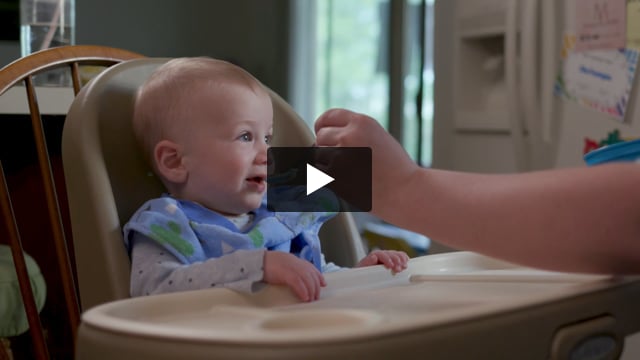
Keep your baby's personality in mind when feeding. A child who likes a lot of stimulation may enjoy it when you "play airplane" with the spoon to get the food into the mouth. But a more sensitive tot might need to focus on eating with few distractions.
If your baby rejects new tastes and textures, serve new foods in small portions and don’t give up. It can take 8–20 tries before a baby accepts a new food.
How Much Should 8- to 12-Month-Olds Eat?
Infant formula and breast milk continue to provide important nutrients for growing infants. But babies start drinking less as they learn to eat a variety of solid foods.
Watch for signs that your child is hungry or full. Respond to these cues and let your child stop when full. A child who is full may suck with less enthusiasm, stop, or turn away from the breast or the bottle. With solid foods, they may turn away, refuse to open their mouth, or spit the food out.
Let your baby finger feed or hold a spoon while you do the actual feeding. This is good preparation for the toddler years, when kids take charge of feeding themselves. And if you haven't already, set feeding schedules for meals and snacks.