
Pregnancy at 4 Weeks: Weekly Calendar

Your Baby's Development at 4 Weeks

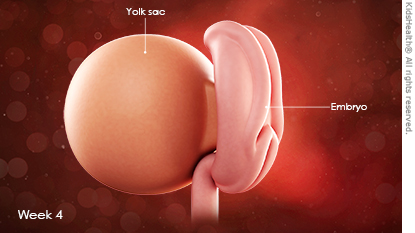
Four weeks into your pregnancy, your baby is now an embryo. An embryo has two layers of cells — the epiblast and the hypoblast. These eventually develop into all of your baby's organs and body parts.
Development Milestones at 4 Weeks
Two other structures that develop now are the amnion and the yolk sac. The amnion, filled with amniotic fluid, will surround and protect your growing embryo. The yolk sac will produce blood and help to nourish your embryo until the placenta takes over that role.
Your Body When You’re 4 Weeks Pregnant
Pregnancy Symptoms at 4 Weeks
Most women won’t feel any signs of pregnancy. Symptoms like breast tenderness, bloating, mood swings, and fatigue usually arrive at about 5 weeks of pregnancy, or after your first missed period.
Some women have slight cramping and spotting during this week while implantation happens. They might mistake this for a period, especially because this is around the time their monthly period was due.
Human Chorionic Gonadotropin (hCG)
Once implanted, the embryo starts to make a hormone called human chorionic gonadotropin (hCG), which helps to maintain the lining of the uterus. It also sends a signal to the ovaries to stop releasing an egg each month, which stops your monthly periods. After that, you may get pregnancy symptoms. Tiredness, tingling or aching breasts, or nausea also can happen with premenstrual syndrome (PMS).
The hCG hormone is the substance that is measured in pregnancy tests. This week, a pregnancy test probably could detect your pregnancy.
But by the end of this week, your period won't happen. Instead, your pregnancy is under way!
Important Appointments to Schedule
Good prenatal care is crucial for your health and your baby’s health. This medical care is provided before and during pregnancy, childbirth, and right after your baby is born. If you haven’t already, schedule your first prenatal visit, which usually happens by the end of the first trimester.
If your pregnancy is considered high-risk (for example, if you are older than 35 or have a history of pregnancy complications), your doctor may want to see you as early as possible and more often during the course of your pregnancy. If you do not have an obstetrician (a doctor who cares for you during pregnancy), this is a good time to find one. Ask your primary care doctor for names of doctors, and you can ask friends and family who have recently given birth for their suggestions.
Nutrients You Need
Now’s the time to make sure you and your baby are getting enough of important nutrients like folic acid, protein, calcium, and iron. These nutrients are important for fetal development.
Be sure to get enough:
- Folic acid through a supplement. This helps prevent defects of the neural tube (the structure that gives rise to the brain and spinal cord), which forms very early in pregnancy.
- Protein, which is used to create new tissue. Protein intake should increase during pregnancy. Foods high in protein include chicken, fish, beans, nuts, dairy, and eggs.
- Calcium. This aids the development of bones and teeth, so make sure you're getting a good dose of dairy products, leafy green vegetables, and legumes (beans, peas, lentils, etc.).
- Iron. This supports your baby's increasing blood volume. Good sources of iron include lean red meat, legumes, poultry, eggs, and leafy green vegetables.
It’s also a good time to look at your lifestyle and see if you can make improvements that could help keep you and your baby healthy. Try to get some additional zzzz’s, so you’re well rested. Stay active and get exercise, but be sure to check with your doctor before starting any new or more vigorous exercise routine.
Tips for This Week
The 4th week of pregnancy is a good time to check your medicine cabinet, make a list of any medications that you’ve been taking, and ask your primary doctor if they are safe to take during pregnancy. Your doctor can advise you about what is safe to take and what alternatives may be available, if needed.
 Note: All information is for educational purposes only. For specific medical advice,
diagnoses, and treatment, consult your doctor.
Note: All information is for educational purposes only. For specific medical advice,
diagnoses, and treatment, consult your doctor.
© 1995- The Nemours Foundation. KidsHealth® is a registered trademark of The Nemours Foundation. All rights reserved.
Images sourced by The Nemours Foundation and Getty Images.