
In this section
Make an Appointment
Make an appointment
To make an appointment: call the Central Scheduling or use the "request an appointment" button to submit your request online.
(877) 607-5280Pregnancy at 9 Weeks: Weekly Calendar

Your Baby's Development at 9 Weeks
What Are My Baby’s Weight & Size at 9 Weeks?
When you are 9 weeks pregnant, your baby is about the size of a grape and weighs about .07 of an ounce.

Development Milestones at 9 Weeks
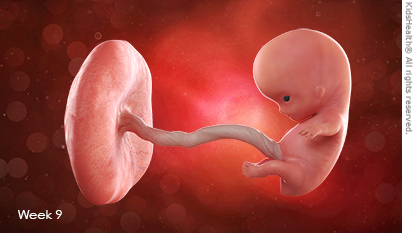
This week the tip of your baby’s nose has developed and can be seen in profile. Flaps of skin over the eyes have begun to shape into eyelids and will become more noticeable in the next few weeks . Your baby's head has been growing — it's quite large compared with the rest of the body and it curves onto the chest.
Your baby’s fingers, arms, and ears are also forming and growing this week. The tiny “tail” at the bottom of your baby's spinal cord has shrunk and almost disappeared.
Another important development is your baby’s digestive system. It continues to develop and the intestines are growing longer.
Your baby may make some first movements this week as muscles develop. If you had an ultrasound now, those movements might even be visible, but you won't be able to feel them for several more weeks.
Your Body When You’re 9 Weeks Pregnant
Pregnancy Symptoms at 9 Weeks
Everyone experiences symptoms a little differently, but here are some common ones:
- cravings increase (you might want certain foods and not want others)
- your moods might change quickly
- clothes may feel tighter, especially around your waist and bust
- breast tenderness
- feeling fatigued or extra tired; rest when you can
- visiting the bathroom more often due to an increased need to urinate (pee) or to deal with bloating and constipation
- heartburn or indigestion; try to avoid spicy or fried foods
Tell your doctor about anything unusual or any symptoms you have. This includes if you're worried about how you're feeling emotionally.

Important Appointments to Schedule
First Prenatal Visit
Good prenatal care is crucial for your health and your baby’s health. If you haven’t already, schedule your first prenatal visit.
If your pregnancy is considered high-risk (for example, if you are older than 35 or have a history of pregnancy complications), your doctor may want to see you as early as possible and more often during the course of your pregnancy.
Medical History
In preparation for your first prenatal visit, take time to note your family's health history and review your medical records:
- Have you had any chronic illnesses, allergies, or surgeries?
- What are the names, dosages, and frequency of over-the-counter or prescription medicines or supplements you take?
- Do you know of any genetic disorders that run in your family?
- Have you had any past pregnancies?
- What are your exercise habits?
These are some of the things your healthcare provider will want to discuss with you, so it will help you to have this information ready. You can also write down any questions you have to ask at your appointment.
Tips for this Week
Now's a good time to take a look at your habits and see if you can make little changes to help keep you more comfortable.
- If you have heartburn or other discomfort, take note of what you ate and try to avoid it, especially if it was a spicy or greasy food.
- Make a list of questions you have for your doctor and call the office if you need help before your next visit.
- Listen to your body and rest when you need it, but balance rest with physical activity like walking or swimming.
- Stay hydrated with 8 to 12 cups of water a day; drinking enough water helps with digestion, fatigue, headaches, bloating, and constipation.
- Limit daily caffeine intake, which can increase your heart rate and blood pressure and make you more likely to be dehydrated. Some women switch to decaffeinated drinks during pregnancy.
 Note: All information is for educational purposes only. For specific medical advice,
diagnoses, and treatment, consult your doctor.
Note: All information is for educational purposes only. For specific medical advice,
diagnoses, and treatment, consult your doctor.
© 1995- The Nemours Foundation. KidsHealth® is a registered trademark of The Nemours Foundation. All rights reserved.
Images sourced by The Nemours Foundation and Getty Images.