


How to Handle Nosebleeds

Nosebleeds are common in kids and usually aren't serious. Most stop on their own and can be cared for at home.

Nosebleeds tend to happen more often in winter and when the air is dry.
How Should I Treat My Child’s Nosebleed?
- Stay calm and reassure your child.
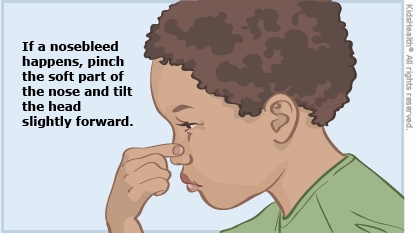
- Have your child sit up with their head tilted slightly forward over a sink, pail, or towel. Do not have your child lean back — this may cause gagging, coughing, or vomiting.
- Pinch the soft part of the nose at the bottom of the nostrils for at least 10 minutes.
When Should I Call the Doctor About a Nosebleed?
Call the doctor if your child has a nosebleed and:
- has blood in the back of the throat even when leaning forward
- may have put something in the nose
- recently started a new medicine
Also call if your child bruises easily, has heavy bleeding from minor wounds, or gets nosebleeds often.
When to Get Emergency Medical Care
Seek emergency care if your child’s nosebleed:
- is heavy
- happens along with dizziness or paleness
- continues after two times of applying pressure for 10 minutes each
- is the result of a blow to the head or a fall
Common Questions About Treating Nosebleeds
Where Should I Pinch the Nose to Stop the Bleeding?
You can pinch the soft part of the nose — just below the bony bridge — using your thumb and forefinger. This area contains the blood vessels most commonly responsible for nosebleeds. Have your child sit upright and lean slightly forward to keep blood from flowing down the throat, which can cause nausea or vomiting.
Hold the pinch for a full 10 minutes without checking to see if the bleeding has stopped. If the nosebleed continues after two rounds of pressure, call your child’s doctor right away or seek emergency care.
Can I Put Petroleum Jelly in My Child’s Nose?
Putting petroleum jelly (one brand name is Vaseline) inside your child’s nose is not recommended. Petroleum jelly is safe to use on the skin, but when inhaled, it can cause a rare but serious condition called lipoid pneumonia.
Instead, choose safer options like saline nasal sprays, humidifiers, or water-based nasal gels designed for children. These can help prevent your child’s nose from drying out without the risks associated with petroleum-based products.
What Can Help Prevent Nosebleeds?
Keep the inside of your child's nose moist with saline (saltwater) nasal spray or gel, or put antibiotic ointment gently around the opening of the nostrils. You also can use a humidifier in your child's bedroom. Discourage nose picking and keep kids' fingernails short.
 Note: All information is for educational purposes only. For specific medical advice,
diagnoses, and treatment, consult your doctor.
Note: All information is for educational purposes only. For specific medical advice,
diagnoses, and treatment, consult your doctor.
© 1995- The Nemours Foundation. KidsHealth® is a registered trademark of The Nemours Foundation. All rights reserved.
Images sourced by The Nemours Foundation and Getty Images.