
Pregnancy at 12 Weeks: Weekly Calendar

Your Baby's Development at 12 Weeks
What Is My Baby’s Size at 12 Weeks?
During pregnancy, babies follow a general growth pattern, but there is a wide range of what’s considered normal. In other words, babies grow at their own pace.
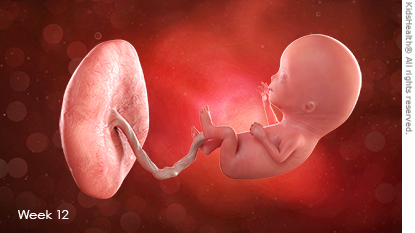
When you are 12 weeks pregnant, your baby is about the size of a small lemon or lime. Baby’s length is about 2 to 2 1/2 inches, from crown to rump (baby’s legs are curled up and cannot be measured).

Developmental Milestones at 12 Weeks
During your last week of the first trimester, your baby's brain continues to develop, and tiny fingernails and toenails start to form. Around now is when vocal cords form, and kidneys start working! After swallowing amniotic fluid, your baby is now able to pass it out of the body as urine (pee).
Your Body When You’re 12 Weeks Pregnant
Pregnancy Symptoms at 12 Weeks
Has anyone told you that you have that "pregnancy glow"? Increased blood volume and pregnancy hormones work together to give you that glow, making skin look flushed, plumper, and smoother. Sometimes, though, the increased oil gland secretion can cause temporary acne.

While you may continue to feel tired a lot, you should soon see that your energy is picking up again and fatigue is lessening. Any nausea and vomiting (morning sickness) may also begin to subside, though it may not fully go away yet. Other symptoms may include:
- breast changes, like tenderness
- peeing more often, since your uterus is expanding
- sensitivity to smells often improves after the first trimester, but sometimes persists
- gum sensitivity, including bleeding gums during brushing (be sure to see a dentist regularly)
- skin changes like “pregnancy glow” or dark patches
Important Appointments at 12 Weeks
If you have not already scheduled your first prenatal visit, you will want to do that this week, or as soon as possible.
What Can I Expect at My First Prenatal Visit?
At your first prenatal visit, the doctor or nurse practitioner will confirm that you’re pregnant and estimate your due date (when your baby might be born). This date is based on when you had your last period. Sometimes a prenatal ultrasound (a test that uses sound waves to make a picture of your baby) can help figure out the due date.
The doctor will do a physical exam to check your health and may want to do prenatal tests. Prenatal tests check your health and your baby’s health. Some are screening tests that can only show the chance of a problem. Others are diagnostic tests that can find out if your baby has a certain problem.
While you’re pregnant, prenatal lab work — like blood tests — is offered during the first trimester (weeks 1–12), second trimester (weeks 13–27), and third trimester (weeks 28–40).
At your first appointment, the doctor also will:
- discuss your health history
- discuss prenatal vitamins, lifestyle, and nutrition recommendations
- establish a prenatal care plan
- address questions and concerns
First Trimester Screening Test
Your health care provider may offer you a first trimester screening test. The screening helps look for any problems your baby may have with chromosomes (tiny strands inside cells that carry genes), like Down syndrome, or birth defects, like heart problems. An abnormal result does not necessarily mean that your baby has a condition — but more testing might be needed. Talk to your health care provider to see if you should have this test.
 Note: All information is for educational purposes only. For specific medical advice,
diagnoses, and treatment, consult your doctor.
Note: All information is for educational purposes only. For specific medical advice,
diagnoses, and treatment, consult your doctor.
© 1995- The Nemours Foundation. KidsHealth® is a registered trademark of The Nemours Foundation. All rights reserved.
Images sourced by The Nemours Foundation and Getty Images.


