
Getting a Blood Test

What Is a Blood Test?
With a blood test, a healthcare technician takes and tests a small sample of a person’s blood to check for many kinds of diseases and conditions. Blood tests help show doctors how the body’s organs (like the heart, thyroid, liver, and kidneys) are working and if any medical treatments are needed.
How Are Blood Tests Done?
Blood tests are done at some doctor’s offices, community labs, diagnostic centers, and hospitals. A doctor, nurse, or phlebotomist (fleh-BOT-eh-mist) — someone who is trained to take blood samples — will collect the blood. A blood draw is a little uncomfortable, but fairly painless and can feel like a quick pinprick. It usually takes only a few minutes.
A healthcare technician will:
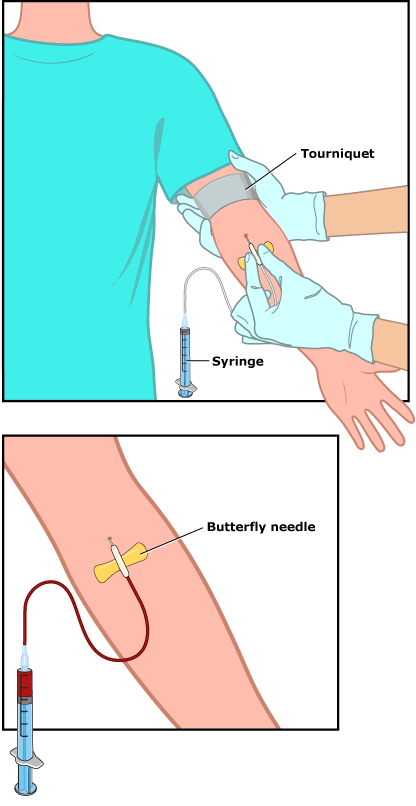
- Clean the skin area (usually the inside of an elbow or back of a hand) with antiseptic (an-tuh-SEP-tik) to get rid of germs.
- Put an elastic band (tourniquet) around the upper arm to apply pressure. This makes the veins swell with blood.
- Insert a needle into a vein. Sometimes it can be hard to find a vein, so the technician may need to try more than once.
- Draw the blood from the vein into a vial or syringe.
- Take off the elastic band.
- Remove the needle and cover the area with cotton and tape or a bandage to stop the bleeding.
Fingerstick Tests & Heel-Stick Collections
Sometimes blood tests can be done as a “fingerstick” test. The healthcare technician cleans your child's finger, then pricks the tip of it with a tiny needle (called a lancet) to collect the blood.
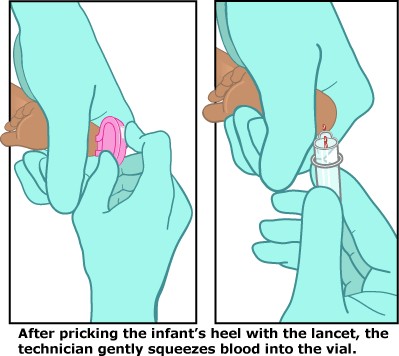
In babies, some blood draws may be done as a "heel-stick collection." After cleaning the area, the technician pricks the baby's heel with a tiny needle to get a blood sample.
What Happens After the Test?
Sometimes the blood sample is tested on-site, and other times it goes to a lab. Blood test results can be ready in a few hours or a few days, depending on the test and whether the sample was sent out.
Your doctor will review the results and explain what they mean.
Types of Blood Tests
Some of the blood tests most often done are:
- general health tests and blood cell tests, like a complete blood count (CBC), which measures the levels of different types of blood cells, and tests for anemia
- basic blood chemistry and metabolism tests to look for many conditions and learn how organs, like the kidneys, are working
- cholesterol tests, like a lipid panel
- hormone, growth, and sexual development tests
- organ function tests to check organs like the liver and pancreas
- allergy and autoimmune tests to look for things like food allergies or diabetes
- disease and infection tests to check for things like sexually transmitted diseases (STDs) and germs
Preparing for a Blood Test
You usually can stay with your child during a blood test. To help kids get ready for it, find out if they need to fast (not eat or drink) or should stop taking medicines before the test. Tell your doctor about any medicines your child takes because some might affect the test results.
Have your child wear a short-sleeved shirt to make the test go more easily and talk about what to expect.
Some kids and teens are afraid of needles. If your child is anxious, work together on ways to stay calm and still because tensing muscles can make it harder to draw blood. Deep breathing or even imagining being in a place that makes your child feel safe and relaxed can help. So can singing a favorite song or bringing a distraction for little kids, like a toy or book. You also can talk with the doctor before the test about other ways to make it easier.
What Else Should I Know?
A blood test procedure is safe with minimal risks. Some kids might feel faint or lightheaded from the test, but this tends to pass quickly. There may be some mild bruising where the needle went in, but this should go away in a couple of days. Get medical care if the discomfort gets worse or lasts longer.
If you have questions about why a blood test is needed or what the results mean, talk with your doctor.
 Note: All information is for educational purposes only. For specific medical advice,
diagnoses, and treatment, consult your doctor.
Note: All information is for educational purposes only. For specific medical advice,
diagnoses, and treatment, consult your doctor.
© 1995- The Nemours Foundation. KidsHealth® is a registered trademark of The Nemours Foundation. All rights reserved.
Images sourced by The Nemours Foundation and Getty Images.