Nosebleeds in Kids

Also called: Epistaxis
Overview
What Is a Nosebleed?
A nosebleed happens when tiny blood vessels inside the nose break and blood comes out of the nostrils. Nosebleeds are common in children, especially kids 3 to 10 years old. Most aren't a sign of something serious, are easy to stop, and can be treated at home.
Types of Nosebleeds
There are two main types of nosebleeds. The most common kind is an anterior nosebleed, which comes from the front of the nose. Capillaries (very small blood vessels) inside the nose may break and bleed.
A posterior nosebleed comes from the deepest part of the nose. Blood flows down the back of the throat even if the person’s head is completely upright. Kids rarely have posterior nosebleeds. They're more common in older adults, people with high blood pressure, and those who have had nose or face injuries.
Top Things to Know
- A nosebleed, also called epistaxis, happens when blood comes out of the nostrils.
- Nosebleeds are common in kids and often caused by nose-picking or dry air.
- Most nosebleeds are nothing to worry about and can be treated at home.
- If home treatment doesn’t stop a nosebleed, see a doctor right away.
Causes & Prevention
Why Do Kids Get Nosebleeds?
Most anterior nosebleeds in kids are caused by nose-picking or dry air. A dry climate, heated indoor air, or dehydration can potentially lead to nosebleeds by irritating or drying out nasal membranes. This causes crusting in the nose that may itch, then bleed when scratched or picked.
Common colds also can irritate the lining of the nose because bleeding can happen after a lot of nose-blowing. Having a cold during dry winter weather can lead to nosebleeds.
Allergies also can cause problems, especially when taking medicine like antihistamines or decongestants to control an itchy, runny, or stuffy nose. Allergy medicine can dry out nasal membranes, leading to nosebleeds.
An injury or blow to the nose can also cause bleeding. If your child has a facial injury that causes a bloody nose and you can't stop the bleeding after 30 minutes or have other concerns about the injury, get medical care right away.
What If Nosebleeds Happen a Lot?
While nosebleeds are rarely serious, there might be a problem if they happen a lot. If your child gets nosebleeds more than once a week, call your doctor. Usually, frequent nosebleeds are easily treated. Sometimes tiny blood vessels inside the nose are irritated and don't heal, which happens more often in kids with ongoing allergies or who get a lot of colds. A doctor might be able to help in these cases.
For bleeding not due to a sinus infection, allergies, or irritated blood vessels, a doctor may order tests to find the cause. Rarely, it’s because of a bleeding disorder or blood vessels that aren't properly formed.
Can Nosebleeds Be Prevented?
Since most nosebleeds in kids are caused by nose-picking or irritation from hot dry air, a few simple tips may help your child avoid them:
- Trim your child's nails to prevent injuries from nose-picking.
- Keep the inside of your child's nose moist with kids’ saline (saltwater) nasal spray or water-based nasal gel, or dab antibiotic ointment gently around the opening of the nostrils. It’s OK to use a small amount of petroleum jelly on the nostrils, but avoid using it too often and avoid using just before bedtime. If swallowed, over time it can cause a rare but serious type of pneumonia.
- Run a cool-mist humidifier (or vaporizer) in bedrooms if the air in your home is dry. Keep the machine clean to prevent mildew buildup.
- Make sure your child wears protective athletic equipment during sports or other activities that could cause a nose injury.
- Children with colds should be encouraged to blow their noses gently into a soft tissue, not forcefully.
- Make sure your child is not using cocaine or other snorted drugs, as these can cause nosebleeds as well (among many other problems).
Home Care
How to Stop a Nosebleed

- Stay calm and reassure your child.
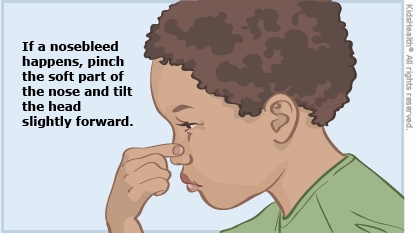
- Have your child sit upright in a chair or on your lap or stand with the head tilted slightly forward.
- Do not have your child lean back. This may cause blood to flow down the back of the throat, which tastes bad and may cause gagging, coughing, or vomiting.
- Gently pinch the nostrils together (just below the bony center part of the nose) with a tissue or clean washcloth.
- Keep pressure on the nose for about 15 minutes. If you stop too soon, bleeding may start again.
After the Bleeding Stops
Have your child relax a while after a nosebleed. Discourage nose-blowing, picking, or rubbing, and any rough play. Encourage your child to relax and avoid lifting heavy objects.
When to Get Help
Call your doctor if your child:
- has nosebleeds often
- may have put something in the nose (you might notice a foul smell with the nosebleed as well)
- tends to bruise easily
- has heavy bleeding from minor wounds or bleeding from another place, like the gums
- recently started taking new medicine
- doesn't stop bleeding after two attempts of applying pressure for 15 minutes each
Get emergency care right away if your child’s nosebleed:
- is heavy or gushing
- happens along with chest pain, dizziness, weakness, or passing out
- is the result of a fall or blow to the head
- is severe or gushing, and making it hard for your child to breathe