
Urinary Tract Infections (UTIs) in Kids

Overview
What Is a Urinary Tract Infection?
A bacterial urinary tract infection (UTI) is the most common kind of infection affecting the urinary tract. Urine, or pee, is the fluid that kidneys filter out of the bloodstream. Pee contains salts and waste products, but it doesn't normally contain bacteria. When bacteria get into the bladder or kidney and multiply in the pee, a UTI can happen.
Top Things to Know
- A urinary tract infection (UTI) is the most common kind of infection of the urinary tract.
- Pain or burning when peeing, blood in pee, back pain, or fever and chills are some signs that your child could have a UTI. Babies with a UTI may only show fever and fussiness.
- Kids (especially girls) can help prevent some UTIs by wiping from front to back after peeing, taking showers instead of baths, and drinking enough water each day.
- If your child has these symptoms, see their doctor. UTIs can be easily treated with antibiotics if needed.
Types of UTIs in Kids
There are three main types of UTIs: urethritis, cystitis, and pyelonephritis.
Urethritis & Cystitis
Bacteria that infect only the urethra (the short tube that carries urine (pee) from the bladder to the outside of the body) cause urethritis (yur-ih-THRY-tis). Bacteria can also cause a bladder infection, which is called cystitis (sis-TIE-tis).
Pyelonephritis
Another, more serious kind of UTI is infection of the kidney itself, known as pyelonephritis (pie-low-nih-FRY-tis). With this type of UTI, a person often has back pain, high fever, and vomiting.
Which Type of UTI is the Most Common?
The most common type of UTI is cystitis. This mostly just causes discomfort and inconvenience. Bladder infections can be quickly and easily treated. And it's important to get treatment promptly to avoid the more serious infection that reaches the kidneys.
Signs & Symptoms
What Are the Signs & Symptoms of a UTI in Kids?
Bladder Infection Symptoms (Cystitis)
A baby or younger child with cystitis will have a fever and/or fussiness. But a child with cystitis may have more symptoms including:
- pain, burning, or a stinging sensation when peeing
- increased urge or more frequent need to pee (though only a very small amount of pee may be passed)
- fever or chills
- vomiting or refusing to eat
- waking up at night a lot to go to the bathroom
- wetting problems, even though the child is potty trained
- belly pain in the area of the bladder (generally below the belly button)
- lower back or side pain
- foul-smelling pee that may look cloudy or contain blood
Kidney Infection Symptoms (Pyelonephritis)
An infection that travels up the ureters to the kidneys is called pyelonephritis (pie-low-nih-FRY-tis) and is more serious. It causes many of these same symptoms, but the child often looks sicker and is more likely to have a high fever (sometimes with shaking chills), pain in the side or back, severe tiredness, and vomiting.
When Should I Call the Doctor?
Call the doctor right away if your child has an unexplained fever with shaking chills, especially if there's also back pain or any type of pain when peeing.
Also call if your child has any of these:
- bad-smelling, bloody, or discolored pee
- low back pain or belly pain (especially below the belly button)
- fever:
Call the doctor if your infant has a fever, feeds poorly, vomits repeatedly, or seems unusually irritable.
Causes & Prevention
What Causes UTIs?
Urinary tract infections in kids are common. They happen when bacteria (germs) get into the bladder or kidneys. Bacteria can come into the urinary tract from the skin around the rectum and genitals, or it can come through the bloodstream from other parts of the body.
Kids with UTIs need to see a doctor. These infections won't get better on their own. They are easy to treat and usually clear up in a week or so. Undiagnosed or untreated UTIs can lead to kidney damage.
Other Contributing Factors
Other risk factors for a UTI include:
- a problem in the urinary tract (for example, a malformed kidney or a blockage somewhere along the tract of normal urine flow)
- an abnormal backward flow (reflux) of urine from the bladder up the ureters and toward the kidneys. This is known as vesicoureteral reflux (VUR), and many kids with a UTI are found to have it.
- not wiping after peeing, or wiping back to front (which moves bacteria around the rectum to the genital and urinary area)
- family history of UTIs
- any problems with peeing habits, such as having incontinence, any problems with the stream of urine flowing out, or holding or avoiding peeing
Who Gets UTIs?
UTIs are much more common in girls because a girl's urethra is shorter and closer to the anus (where poop comes out). Uncircumcised boys younger than 1 year also have a slightly higher risk for a UTI.
Can UTIs Be Prevented?
These tips can help prevent UTIs:
- In infants and toddlers, change diapers often to help prevent the spread of bacteria that cause UTIs. When kids are potty trained, it's important to teach them good hygiene. Girls should know how to wipe from front to rear — not rear to front — to prevent germs from spreading from the anus to the urethra.
- School-age girls should avoid bubble baths and strong soaps that might cause irritation. They also should wear cotton underwear instead of nylon because it's less likely to encourage bacterial growth.
- All kids should be taught not to "hold it" when they have to go. Pee that stays in the bladder gives bacteria a good place to grow.
- Kids should drink plenty of fluids, but avoid caffeine.
Diagnosis
How Are UTIs Diagnosed?
To diagnose a UTI, healthcare providers ask questions about what's going on, do an exam, and take a sample of pee for testing.
Urine Samples
How a sample is taken depends on a child's age. Older kids might simply need to pee into a sterile cup. For younger children in diapers, a catheter is usually preferred. This is when a thin tube is inserted into the urethra up to the bladder to get a "clean" urine sample.
Tests Used to Confirm a UTI
The sample may be used for a urinalysis (a test that microscopically checks the urine for germs or pus) or a urine culture (which attempts to grow and identify bacteria in a laboratory). Knowing what bacteria are causing the infection can help your doctor choose the best treatment.
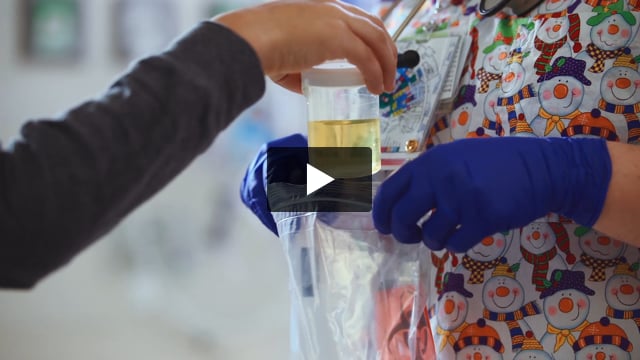
Getting a Urine Test
By testing your pee, doctors can learn all sorts of things about what is going on inside your body.
UTI Treatment in Kids
How Are UTIs Treated?
UTI treatment can include antibiotics. Taking antibiotics kills germs and helps kids get well again. To be sure antibiotics work, you must give all the prescribed doses — even when your child starts feeling better. Give prescribed antibiotics on schedule for as many days as your doctor directs. Keep track of your child's trips to the bathroom, and ask your child about symptoms like pain or burning during peeing.
These symptoms should improve within two to three days after antibiotics are started. Encourage your child to drink plenty of fluids, but skip drinks that contain caffeine (which can irritate the bladder), such as soda and iced tea.
Most UTIs are cured within a week with treatment. After several days of antibiotics, your doctor may repeat the urine tests to be sure that the infection is gone. It's important to make sure of this because an incompletely treated UTI can come back or spread.
Treatment for More Severe UTIs
Kids with a more severe infection may need treatment in a hospital so they can get antibiotics by injection or IV (intravenously, given into a vein right into the bloodstream).
This might happen if:
- The child has high fever or looks very ill, or a kidney infection is likely.
- The child is younger than 6 months old.
- Bacteria from the infected urinary tract may have spread to the blood.
- The child is dehydrated or is vomiting and cannot take any fluids or medicine by mouth.
Kids with VUR will be watched closely by the doctor. VUR might be treated with medicines, or less commonly, surgery. Most kids outgrow mild forms of VUR, but some can develop kidney damage or kidney failure later in life.
 Note: All information is for educational purposes only. For specific medical advice,
diagnoses, and treatment, consult your doctor.
Note: All information is for educational purposes only. For specific medical advice,
diagnoses, and treatment, consult your doctor.
© 1995- The Nemours Foundation. KidsHealth® is a registered trademark of The Nemours Foundation. All rights reserved.
Images sourced by The Nemours Foundation and Getty Images.