A to Z: Eardrum, Perforated

May also be called: Perforated Eardrum; Ruptured Eardrum
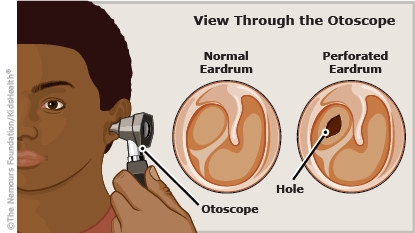
A perforated (or ruptured) eardrum is a hole in the eardrum caused by injury or infection.
More to Know
A perforated (or ruptured) eardrum is often painful and fluid may drain from the ear. Someone with a ruptured eardrum might have dizziness or nausea, ringing or buzzing in the ear, and might not hear as well as usual.
In most cases, the hole closes on its own and hearing returns to normal within several months. The doctor may prescribe antibiotics to prevent infection or apply a small paper patch to speed up healing. Sometimes, surgery is needed to repair a persistent hole that hasn't healed.
Keep in Mind
A perforated eardrum usually doesn't cause long-term problems.
All A to Z dictionary entries are regularly reviewed by KidsHealth medical experts.