Weight Loss Surgery

Overview
What Is Weight Loss Surgery?
Weight loss surgery, also called bariatric surgery, is an operation that helps some people who weigh too much lose weight when other methods haven’t worked. But it’s not a quick fix. People need to put in a lot of hard work before and after the operation.
The surgery may be needed because having an unhealthy weight can lead to serious health problems. For example, people who are 100 or more pounds over their ideal body weight are more likely to develop conditions like diabetes, heart disease, liver disease, joint problems, and sleep apnea (when breathing pauses during sleep).
Top Things to Know
- Weight loss surgery in teens may help prevent and fix serious health problems.
- Gastric sleeve and gastric bypass are the two main kinds of surgery.
- Teens must be physically and emotionally ready, with strong family support.
- Success requires long-term lifestyle changes, like eating healthy and staying active.
Who Can Get Weight Loss Surgery?
Figuring out if your teen can get weight loss surgery requires a team approach. This includes your child and the rest of your family, doctors, dietitians, exercise specialists, and psychologists.
Typically, these teens can be considered for weight loss surgery:
Teens younger than age 18 with a body mass index (BMI) greater than the:
- 99th percentile or
- 95th percentile and a serious health problem due to obesity, like diabetes, heart disease, liver disease, or sleep apnea
BMI percentiles show how a child's measurements compare with those of other kids who are the same gender and age. For example, if a child has a BMI in the 96th percentile, 96% of the kids of the same gender and age who were measured had a lower BMI.
Teens age 18 or older with a BMI of:
- 40 or more or
- 35 or more and a serious health problem due to obesity, like diabetes, heart disease, liver disease, or sleep apnea
There isn’t a set age when teens can have weight loss surgery, but doctors have the most research and experience with those who are age 13 or older. Teens must be committed to making the lifestyle changes needed for success and have the support of their families.
Types of Weight Loss Surgery
The two main kinds of surgery for weight loss in teens are gastric sleeve and gastric bypass. Both operations cause similar amounts of weight loss, but the gastric sleeve has fewer severe side effects.
Gastric Sleeve Surgery
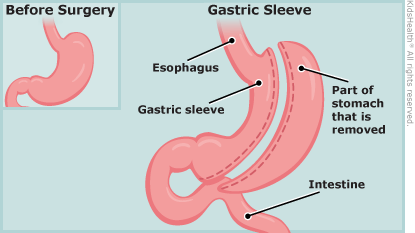
Gastric sleeve surgery, also called sleeve gastrectomy, is the most common weight loss procedure. In this operation, the surgeon removes part of the stomach and makes a tube or "sleeve" out of the rest. The new stomach is smaller than the original one and is shaped like a banana.
Part of the stomach that’s removed makes hormones (chemical messengers) that affect hunger and how the body uses glucose — a kind of sugar. Because of this and the smaller stomach, after surgery people usually eat less, feel full sooner, and are less hungry. Their bodies will also handle glucose better, which can help with problems like insulin resistance.
The gastric sleeve operation changes only the stomach and is permanent.
Gastric Bypass Surgery
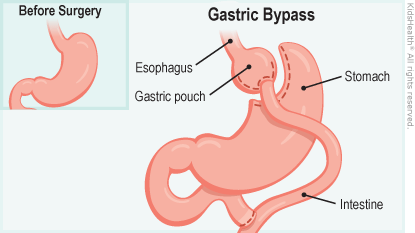
In a gastric bypass, also called "Roux-en-Y" gastric bypass, surgeons make a small pouch at the top of the stomach. This pouch becomes the new stomach. Then they connect the pouch to the middle part of the small intestine, bypassing (going around) the upper part of the small intestine.
After the surgery, the stomach pouch holds a lot less food than a normal-sized stomach. A person will eat less, feel full sooner, and be less hungry. And because the small intestine is shorter, the body will absorb fewer calories and nutrients.
The gastric bypass procedure is permanent.
What to Expect
Before the Surgery
Before doctors recommend weight loss surgery for teens, they’ll make sure surgery is a safe option by doing a physical exam and ordering tests such as:
- blood tests to check for things like diabetes, thyroid problems, and liver problems, and to look at cholesterol and vitamin levels
- a metabolism test to show how much food someone needs in a day, which helps dietitians make a custom nutrition plan
- a sleep study to check for sleep apnea
Your teen will talk with a counselor about how to get ready emotionally for surgery and life afterward. An exercise specialist will help create a plan for physical activity.
Most doctors — and insurance companies — require teens to meet with their care team on a regular basis for several months. It usually takes at least 6 months to prepare for surgery. This helps build healthy habits and makes sure your teen is ready.
During the Surgery
Just before weight loss surgery, teens will get general anesthesia, which lets them sleep through the surgery and not feel any pain. The operation takes several hours. Gastric sleeve surgery is shorter than gastric bypass surgery.
The operation is done using small cuts and special tools, which helps speed up recovery time. A team of experts — including surgeons, nurses, and anesthesiologists (an-ess-thee-zee-OHL-uh-jists) — will monitor your teen closely throughout the surgery.
After the Surgery
After weight loss surgery, most teens stay in the hospital for a day or two. They’ll follow a liquid diet, then slowly move to blended or pureed foods so they can let their stomach heal and get used to its new size. They may have to wait up to six weeks before they’re able to have solid foods again. They’ll also be encouraged to take a lot of walks to help get blood flowing.
Pain after surgery tends to be mild, so you can give over-the-counter (OTC) pain medicines, like acetaminophen and ibuprofen. As kids start to feel better over the next few weeks, they typically need less pain medicine.
It’s important for teens to keep seeing their healthcare team, even long after surgery. This helps prevent problems and reminds them to stick with healthy habits.
What Are the Risks of Weight Loss Surgery?
People may have pain after eating. They also might throw up, get diarrhea, or have reflux (heartburn) — especially if they eat too much or too fast. Some teens develop stones in their gallbladder (an organ that helps with digestion) because of quick weight loss, so they may be given medicine to help prevent this problem.
Dumping Syndrome
"Dumping syndrome" is a problem mainly seen with gastric bypass. It’s when food moves too quickly through the stomach and intestines, causing nausea, dizziness, sweating, stomach cramps, and diarrhea. Eating high-sugar or high-fat foods makes dumping worse, so people who have had weight loss surgery need to be careful about what they eat. Talking to a dietician about what foods to choose can help.
Poor Nutrition
People who have had weight loss surgery might not get all the nutrition they need. One reason is because they’re eating less. Also, when food doesn't move through the entire digestive system, the body can't absorb as many vitamins and minerals. After surgery, most people take vitamin and mineral supplements.
Mental Health Problems
Mental health problems, like depression and anxiety, are a concern before and after surgery. Most people feel better about themselves after weight loss surgery, but some may still have trouble coping. It’s important for people who have had the surgery to follow up with their mental health counselor and get help if they feel overwhelmed or sad, or have other emotional concerns.
Other Problems
In rare cases, some people have serious problems after weight loss surgery, like:
- bleeding
- bad reaction to anesthesia
- infection near the cuts used for the surgery
- leaky stomach or intestine, which can lead to an infection of the area around the stomach and other organs
- blood clot in the legs or lungs
- blockage in the intestines
- deficiencies (not enough) of some vitamins and minerals
- weight gain
What Else Should I Know?
After surgery, people need to get used to eating very small amounts. They need to chew their food more than they used to and space meals out during the day. If they don't, they might feel sick. They might even start gaining weight again. For weight loss surgery to be a success, it’ll take lifelong changes.
If you're concerned about your teen's weight and think weight loss surgery may be a good option, talk with your doctor.