parents
How to Take an Axillary (Armpit) Temperature

How Do I Take an Axillary (Armpit) Temperature?
The axillary (armpit) method is a convenient way to take a child's temperature, especially for kids who can't hold a thermometer in their mouths. But an axillary (AK-seh-ler-ee) reading is not as accurate as a rectal temperature, or an oral temperature in kids who are old enough to cooperate.
To take an axillary temperature:
- Use a digital thermometer. Don’t use a glass thermometer, as these aren’t safe.
- If your child has just taken a bath or has been under blankets or in multiple layers (or swaddled, if an infant), wait about 20–30 minutes to take the temperature.
- Remove your child's shirt and place the thermometer under an armpit (it must touch skin only, not clothing).
- Fold your child's arm across the chest to hold the thermometer in place.
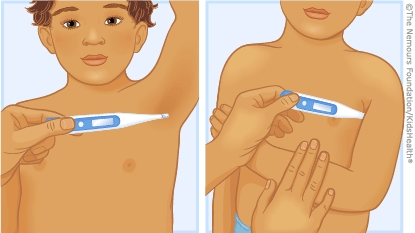
- Wait until you hear the right number of beeps or other signal that the temperature is ready to be read. Write down the number on the screen, noting the time of day that you took the reading.
- A reading of 99°F (37.2°C) or above means your child has a fever.

Taking Your Child’s Temperature
Your child feels warm, but is it a fever? Now, more than never, it’s important to know. Here's how to use a thermometer to get an accurate reading at every age.
Medically reviewed by: Melanie L. Pitone, MD
Date reviewed: January 2023