
Shin Splints
Overview
What Are Shin Splints?
Shin splints are pain on the inner part of the shinbone. They're usually brought on by running or another high-impact activity.
Shin splints, also called medial tibial stress syndrome (MTSS), get better with rest and don’t cause lasting problems.
Top Things to Know
- Shin splints are a kind of injury (often due to running) that cause pain on the shinbone.
- Kids may have shin pain, soreness, and swelling.
- Treatment may include rest, ice, pain medicine, and foot and leg exercises.
- Wearing supportive shoes, using a trainer, and varying exercises may help prevent shin splints.
Signs & Symptoms
What Are the Signs & Symptoms of Shin Splints?
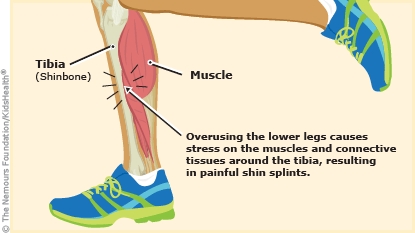
People with shin splints have pain along the inner edge of the shinbone, also known as the tibia. The pain usually happens during activity and may last for a while afterward.
Shin splints also can lead to swelling and tenderness of the shinbone.
Causes & Prevention
What Causes Shin Splints?
The pain of shin splints is caused by irritation and swelling of the muscles, tendons, and bones in the lower leg.
Shin splints are an overuse injury. They happen because someone does the same movement over and over again (for example, running). They also can happen if a person makes a sudden change in an exercise routine, such as exercising more often, making the workouts more intense, introducing hills too quickly, or a change in running surface.
Who Gets Shin Splints?
Shin splints tend to happen in people who do high-impact activities or ones with frequent stops and starts, such as running, jumping, basketball, football, soccer, and dancing.
Some things make it more likely that someone will get shin splints, such as:
- having flat feet
- exercising while wearing worn-out athletic shoes
- being overweight
- having hips and ankles that are not flexible
- poor form while running, such as taking too long a stride and/or a big heel strike
Can Shin Splints Be Prevented?
Kids and teens can help prevent shin splints from coming back by:
- wearing shock-absorbing athletic shoes with arch support
- replacing athletic shoes that don't fit well or are worn out
- increasing any exercise routine slowly
- working with a trainer or coach to make sure they train safely
- cross-training by doing different kinds of exercises on different days
Diagnosis
How Are Shin Splints Diagnosed?
To diagnose shin splints, healthcare providers:
- ask about symptoms
- do an exam, paying special attention to the lower leg
Usually no testing is needed to diagnose shin splints, but X-rays may be done to rule out stress fractures and other potential causes of leg pain.
Treatment & Care
How Are Shin Splints Treated?
To treat shin splints, people need to cut down or avoid all activities that cause pain. Walking and non-weight bearing exercises (like swimming or riding a bike) usually do not cause pain and can be continued.
To help someone with shin splints heal, the healthcare provider may recommend:
- Putting ice or a cold pack on the shin every 1–2 hours for 15 minutes at a time. Put a thin towel over the skin to protect it from the cold.
- Giving medicine for pain such as ibuprofen (Advil, Motrin, or a store brand) or acetaminophen (Tylenol or a store brand). Follow the directions that come with the medicine for how much to give and how often.
- Exercises to stretch and strengthen the foot/leg muscles and tendons
- Using an elastic wrap or compression stocking to help with pain and swelling
- Wearing better footwear with arch support
- Improving their running form/gait
Shin splints usually get completely better with rest.
When Can My Child Return to Sports or Activities?
Someone with shin splints:
- can do any sport that doesn't cause pain
- should stop doing any activity that causes pain
- can slowly return to sports after being pain-free for two weeks
Depending on how severe the symptoms are, it can take up to 4–6 weeks of rest before a child or teen can return to sports.