
Pregnancy at 16 Weeks: Weekly Calendar

Your Baby's Development at 16 Weeks
What Is My Baby’s Weight and Size at 16 Weeks?
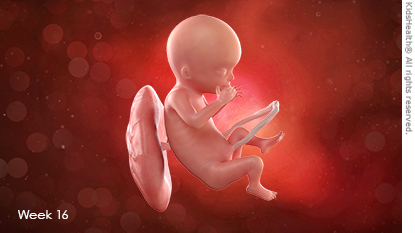
At 16 weeks, you are 4 months pregnant, which means you and your baby are almost halfway through pregnancy! Your baby weighs just over 4 ounces and is about the size of an avocado.

Development Milestones at 16 Weeks
Your baby can now hold the head up, and the development of facial muscles allows for a variety of expressions, like squinting and frowning.
The circulatory system is now functioning and pumping blood. And your baby may already be sucking the thumb! Eyes are developing, too. Although they remain closed, they can already sense light!
Your Body When You’re 16 Weeks Pregnant
Pregnancy Symptoms at 16 Weeks
Your belly is growing and you might start to look pregnant. But every pregnancy is different, so don’t worry if you are showing more than or less than other moms-to-be. Your individual body shape and size can affect how you carry and the size of your baby bump.
While nausea and morning sickness symptoms may have subsided, you’ll likely still have some other symptoms like:
- backaches
- constipation
- increased vaginal discharge
- bleeding gums
- varicose veins
What Can Help
Consider trying gentle pre-natal yoga and using a heating pad to help ease backaches. For constipation, eat more fiber, stay hydrated, and use a stool softener if your doctor recommends one.
Keep up with your oral health by brushing your teeth and flossing regularly and get dental care like check-ups and cleanings as scheduled. Talk to your doctor if your dentist recommends a mouth rinse, as not all may be good to use during pregnancy.
Physical activity, especially low-impact activities like walking and yoga, can help ease many symptoms. Ask your doctor for more advice on handling pregnancy discomfort.

Important Appointments
Second Trimester Screen
Between weeks 16 and 18 of pregnancy, your health care provider may offer you a second trimester screening test (known as the multiple marker test or triple screen). This test measures:
- levels of a certain protein made by your baby, called alpha-fetoprotein (AFP)
- pregnancy hormones hCG and estriol in the mother's blood
Sometimes, the level of another substance, inhibin-A, is also measured. This test is called a quadruple screen (or quad screen).
Follow-Up Tests
If you took a first trimester screening test (which includes a blood test and an ultrasound) you may have been called back to the doctor for more testing. This is because the first trimester screen results can tell only if your baby is at risk for certain conditions. But they don’t diagnose these conditions.
An abnormal result does not necessarily mean that a baby has a problem. But it may mean more testing is needed to check if the baby has a neural tube defect such as spina bifida or a rare chromosomal abnormality like Down syndrome. Talk to your healthcare provider about the risks and benefits of these tests.
Tips for This Week
It may be time to hang up your regular wardrobe and treat yourself to some maternity clothes so you are comfortable and cozy!
As their belly grows, a lot of moms-to-be also find that sleeping on their side (sometimes with a pillow between the legs and another under the belly) with knees bent is a more restful position. Some moms find that a full body pillow helps them sleep more comfortably.
 Note: All information is for educational purposes only. For specific medical advice,
diagnoses, and treatment, consult your doctor.
Note: All information is for educational purposes only. For specific medical advice,
diagnoses, and treatment, consult your doctor.
© 1995- The Nemours Foundation. KidsHealth® is a registered trademark of The Nemours Foundation. All rights reserved.
Images sourced by The Nemours Foundation and Getty Images.