
Lactose Intolerance
Overview
What Is Lactose Intolerance?
Lactose intolerance is when someone has trouble digesting lactose, a type of sugar found in milk and other dairy foods.
If people with lactose intolerance eat dairy products, the lactose passes into their intestines, leading to gas, cramps, a bloated feeling, and diarrhea.
Some people can have small amounts of dairy without problems. Others have a lot of stomach trouble and need to avoid all dairy products. Many foods, drinks, and digestive aids are available to help manage lactose intolerance.
What Happens in Lactose Intolerance?
Normally, when we eat something with lactose, an enzyme in the small intestine called lactase breaks it down into simple sugars. The bloodstream absorbs these simple sugars, which are turned into energy.
In lactose intolerance, the body doesn't make enough lactase to break down lactose. Instead, undigested lactose sits in the gut and gets broken down by bacteria, causing gas, bloating, stomach cramps, and diarrhea.
Lactose intolerance is fairly common. Kids and teens are less likely to have it, but many people become lactose intolerant in adulthood. Some healthcare providers view lactose intolerance as a normal human condition and not a disease or serious health problem.
Who Gets Lactose Intolerance?
Besides age, people can become lactose intolerant due to:
- Ethnic background. People of Asian, African, Native American, and Hispanic backgrounds are more likely to develop lactose intolerance at a young age.
- Other problems with the digestive tract. People who have inflammation of their upper small intestine, such as celiac disease or Crohn's disease, have less of the lactase enzyme.
- Medicines. Some antibiotics can trigger temporary lactose intolerance by affecting how the intestine makes lactase.
- Infection. After having diarrhea, some people have a temporary lactose intolerance that usually gets better after a few days or weeks.
Top Things to Know
- Lactose intolerance is when the body can’t easily digest lactose, a sugar in milk.
- Kids may have gas, bloating, cramps, nausea, or diarrhea after eating dairy products.
- Manage it by limiting dairy, using lactose-free products, or taking lactase supplements.
- Lactose intolerance is common but not serious; it can be mistaken for other digestive issues.
Signs & Symptoms
What Are the Signs & Symptoms of Lactose Intolerance?
Lactose intolerance can cause a variety of symptoms. It all depends on how much dairy or milk-containing foods people consume and how little lactase their body makes.
Usually within 30 minutes to two hours after eating, someone with lactose intolerance will have:
- nausea
- stomach cramps
- bloating
- gas
- diarrhea
Diagnosis
How Is Lactose Intolerance Diagnosed?
To diagnose lactose intolerance, doctors ask about a child's symptoms and diet. They might test the breath for hydrogen levels before and after the child drinks lactose. Normally very little hydrogen gas is detectable in the breath. But undigested lactose in the colon breaks down and makes various gases, including hydrogen.
Hydrogen Breath Test
If your child has a hydrogen breath test, they'll blow into a tube for a beginning sample. Then they'll swallow a drink with lactose in it, wait a while, and breathe into the tube again. Your child will blow into the tube every half hour for two hours to measure hydrogen levels. The levels should go up over time if your child has lactose intolerance.
Endoscopy
Doctors also can find out if someone can digest lactose by testing for the presence of lactase with an endoscopy. During this procedure, doctors view the inside of the intestines by inserting a long tube with a light and a tiny camera on the end into the mouth.
A doctor can then take tissue samples and pictures of the inside of the gut. The amount of lactase enzyme can be measured in one of these tissue samples.
Treatment & Care
How Is Lactose Intolerance Treated?
Kids and teens can manage lactose intolerance by drinking less milk and eating fewer dairy products. Most can eat a small amount of dairy. But they need to eat it with other foods that don't contain lactose and not eat too much dairy at once. For example, instead of drinking a milkshake by itself, your child should drink it while eating a dairy-free sandwich.
Other dairy products, such as yogurt and cheeses, can be easier to digest than milk. Lactose-free milk is also a great way to get calcium in the diet without the problems. It can also help for kids and teens to keep a food diary to learn which foods they can or can't tolerate.
A lactase enzyme supplement can help too. Taking this before eating foods that contain dairy helps the body digest the lactose sugar in dairy. This can prevent pain, cramping, bloating, gas, and diarrhea.
How Can My Child Get Calcium?
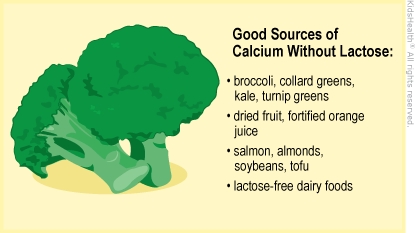
Kids who are lactose intolerant can get calcium from non-dairy products like:
- calcium-fortified juice or soy milk
- green, leafy vegetables like broccoli, collard greens, kale, and turnip greens
- beans
- salmon
- almonds
- soybeans
- dried fruit
- tofu
It’s a good idea to talk to a registered dietician, who can help your child come up with dairy alternatives and develop a well-balanced diet with lots of calcium to build strong bones. Some kids and teens might need calcium and vitamin D supplements.
How Can Parents Help?
To help your child deal with lactose intolerance:
- Buy lactose-reduced or lactose-free milk and calcium-fortified juices.
- Remind your child to take a lactase enzyme supplement (such as Lactaid) right before eating dairy products. These come as drops or tablets that can even be added to milk.
- Serve a variety of dairy-free foods that are rich in calcium, such as broccoli, beans, tofu, or soy milk.
- Hard cheeses such as cheddar, which are lower in lactose, are often better tolerated than soft cheeses such as ricotta.
- Yogurts that contain active cultures are easier to digest and much less likely to cause lactose problems.
- Check medicine and food labels. Lactose is added to some processed foods and can be found in some medicines. Some words are clues that lactose is present: butter, cheese, cream, dried milk, milk solids, powdered milk, and whey, for example.