
Urine Dipstick Test (Dipstick Urinalysis)
Overview
What Is a Urine Dipstick Test (Dipstick Urinalysis) and Why Is It Done?
Sometimes doctors use a urine, or pee, sample to learn more about a child’s health. A urine dipstick test checks a pee sample for the levels of different substances, like blood.
Doctors might order the test to look for signs of:
- a urinary tract infection (UTI)
- kidney disease
- diabetes
- a urinary tract injury
The dipstick method is fast, so results are often ready soon after the test is taken.
Top Things to Know
- The urine dipstick test (dipstick urinalysis) checks pee for things like blood or protein.
- Doctors do the test to look for problems like UTIs, diabetes, or kidney conditions.
- Your doctor can explain what it means if any levels are too high or too low.
What to Expect
What Happens During a Urine Dipstick Test?
To get a urine dipstick test, your child will first need to pee into a sterile sample cup. Then the sample will be tested.
Getting a Sample
Your care team will let you know the best way to get a sample of your child's pee. Some types of urine tests need a sample that’s taken in the morning as soon as your child wakes up. If so, you may be asked to help your child with the test at home. Follow any storage and transportation instructions the lab gives you.
If your child isn't toilet trained and can't pee into a cup, the doctor or nurse will insert a catheter (a narrow soft tube) into the bladder to get a small sample.
For babies, sometimes a sterile bag can be put around the diaper area to collect the sample. To do this type of collection at home, clean the skin around the urinary opening (urethra). Then, place the bag around it and secure with the attached tape. Your child can wear a diaper over the bag. The doctor will tell you how to remove the bag after your child has peed into it, usually within an hour, and where to bring it.
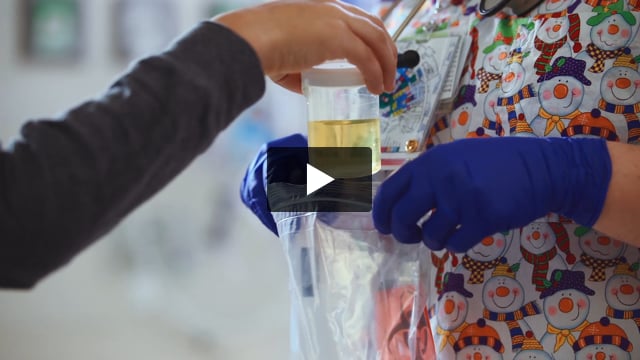
Getting a Urine Test
By testing your pee, doctors can learn all sorts of things about what is going on inside your body.
Checking the Sample
The urine dipstick test involves using a dipstick — a thin, plastic stick with strips of chemicals on it — and placing it into the pee sample. Then, the stick's chemical patches will change color depending on things like:
- white blood cells (which help fight infections)
- protein
- glucose (the main type of sugar in the blood)
- the pH (acidity) level of pee
- the concentration of the pee
- bilirubin (made when red blood cells break down)
- blood
- ketones (made when fats break down for energy)
The nurse or technician doing the test will compare the dipstick to a chart to see what the results mean.
What’s an Automated Dipstick Urinalysis?
With an automated dipstick urinalysis, the person testing the dipstick puts it into a machine that gives the results. This is instead of comparing it to a chart by hand.
How Can I Help My Child Prepare for a Urine Test?
To help kids get ready for a urine test, find out if they need to avoid any specific foods or activity before the test, or should stop taking any medicines.
Urine tests are painless. To help ease any fears, explain in simple terms how the test is done and why it's needed. For older kids who can pee in the toilet, make sure they understand that the urinary opening (urethra) must be cleaned ahead of time and pee must be collected midstream. This means letting a little bit of pee go into the toilet before collecting it in the cup to help clear out any bacteria that might be near the urethra.
Also make sure the cup doesn't touch your child's skin, and things like toilet paper or hair don't get into the sample. If these or bacteria do get into it, doctors might not be able to tell if your child has an infection, for example.
If your child is having their period at the time of the test, tell your doctor. If blood gets into the urine sample, it can be hard to know if it’s due to the period or if it’s from elsewhere in the body.
What Do Urine Dipstick Test Results Mean?
Lots of things, like food and medicine, can cause levels of substances measured in a urine dipstick test to rise and fall. Your doctor will explain what the results of the test mean for your child. What’s “normal” varies based on things like age and gender. Doctors usually recommend other tests, like a microscopic urinalysis or blood test, before giving a definite diagnosis.
If you have questions about the urine dipstick test, talk to your doctor.