
Raynaud Syndrome
What Is Raynaud Syndrome?
Raynaud syndrome is a condition that makes a person's fingers or toes temporarily feel cold, numb, tingly, or painful. When a child has a Raynaud (ray-NOH) episode, blood vessels under the skin become narrow, so less blood gets to the affected area.
What Are the Signs & Symptoms of Raynaud Syndrome?
Raynaud syndrome usually affects fingers and toes. Less often, episodes can affect the nose, ears, lips, nipples, or knees.
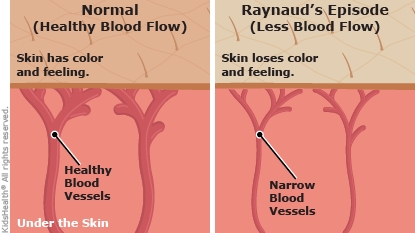
During an episode, the skin will:
- get very pale or white
- turn bluish or purplish
- look rosy or red as the person starts warming up
The skin usually changes from white to blue or purple, then to red. But in some kids, all these colors may not happen, or the colors may happen in a different order.
Episodes can happen when a child is exposed to cold or is under emotional stress. The cold or stress is called a trigger. Episodes usually end within about 15 minutes after a child warms up or calms down.
Who Gets Raynaud Syndrome?
Doctors usually don't know what causes Raynaud. But the condition is more likely to happen in people who:
- have certain medical conditions, such as lupus or other diseases
- have relatives with Raynaud
How Is Raynaud Syndrome Treated?
Kids with Raynaud often can ease the symptoms by doing things on their own. For example, to warm fingers or toes during an episode, they can:
- Move to a warmer location.
- Swing their arms in circles.
- Wiggle the fingers or toes.
- Place their hands or feet in warm (not hot) water.
- Place their hands against a warm part of the body (such as the armpits).
- Rub their hands together or massage the feet.
If Raynaud is severe or causes problems, doctors may prescribe medicine to help.
How Can Parents Help?
If your child has Raynaud:
- Encourage your child to get exercise. This can help with circulation.
- Prepare for the weather:
- When it's cold outside, have your child wear warm, loose layers; thick socks; a hat; and gloves or mittens (mittens help keep fingers warmer).
- In warm weather, your child should have a sweater or jacket available to wear in air-conditioned places.
- Help your child avoid things that can make Raynaud worse, such as:
- smoking and secondhand smoke
- caffeine
- stress
- tight-fitting rings, bracelets, or shoes, because these can make it harder for blood to move through blood vessels in the area
- Teach your child to do relaxation exercises. This can be helpful for managing stress, especially if stress triggers episodes in your child.