
Feeding Your 4- to 7-Month-Old
Is My Baby Ready to Eat Solid Foods?
Most babies who are 4, 5, 6, or 7 months old are ready to try their first solid foods. Experts recommend starting solid foods when a baby is about 6 months old, depending on the baby's readiness and nutritional needs.
How can you tell if your baby is ready for solids? Here are a few hints:
- Does your baby swallow food or push it out of the mouth? Babies have a natural tongue-thrust reflex that pushes food back out. Wait until this reflex disappears (typically when babies are 4–6 months old).
- Can your baby support the head? To eat solid food, an infant needs good head and neck control and should be able to sit up.
- Is your baby interested in food? Babies who stare, reach and grab, and open their mouths for food are ready to try solid foods.
Check With Your Doctor (& Your Baby!)
Be sure to check with your doctor before giving any solid foods. If your doctor gives the go-ahead but your baby seems frustrated or uninterested in solid foods, try waiting a few days before trying again. Breast milk and formula will still meet nutritional needs as your baby learns to eat solid foods. But after 6 months, babies need the added nutrition — like iron and zinc — that solid foods provide.
Don't add cereal or other food to your baby's bottle because it can lead to too much weight gain.
Watch for signs that your child is hungry or full. Respond to these cues and let your child stop when full. A child who is full may suck with less enthusiasm, stop, or turn away from the breast or the bottle. With solid foods, babies may turn away, refuse to open their mouth, or spit the food out.
How Should I Start Feeding My Baby Solid Foods?
Choose the right time. When your baby is ready and the doctor says it’s OK to try solid foods, pick a time of day when your baby isn't tired or cranky. You want your baby to be a little hungry, but not hungry enough to be upset. So you might want to give your baby a little breast milk or formula first.
Use a safe seat. Have your baby sit supported in your lap or in a high chair with a safety strap.
Start with a single-grain cereal. Most babies' first food is iron-fortified infant single-grain cereal mixed with breast milk or formula. Place the spoon near your baby's lips, and let the baby smell and taste it. Don't be surprised if this first spoonful is rejected. Wait a minute and try again. Most food offered to your baby at this age will end up on the baby's chin, bib, or high-chair tray. Again, this is just an introduction.
Try single-ingredient purées next. When your little one gets the hang of eating cereal off a spoon, it may be time to try single-ingredient puréed meat, vegetables, or fruit. The order in which you give them doesn't matter, but go slow. Offer foods that are high in iron and zinc — like meat, poultry, eggs, and beans — especially if your baby is breastfeeding.
Be patient. Try one food at a time and wait several days before trying something else new. This will let you identify any foods that your baby may be allergic to.
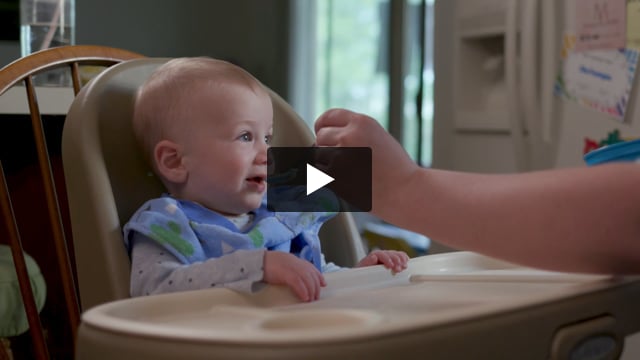
Starting Your Baby on Solid Foods
Find out if your baby is ready for solid foods, and if so, what to give, how to give it, and what to avoid.
Which Foods Should I Avoid Giving My Baby?
Babies shouldn't have:
- foods with added sugars and no-calorie sweeteners
- high-sodium foods
- honey, until after the first birthday because it can cause botulism in babies
- unpasteurized juice, milk, yogurt, or cheese
- regular cow's milk or soy beverages before 12 months instead of breast milk or formula (But it’s OK to offer pasteurized yogurt and cheese.)
- foods that may cause choking, like hot dogs, raw carrots, grapes, popcorn, and nuts
What About Foods That Can Cause Allergies?
It's OK to introduce foods early on that are associated with food allergies as long as they are soft, mushy, and easy to swallow. These include foods like eggs, cow’s milk, seafood, nuts, wheat, soy, and peanuts. Small amounts of peanut butter or nut butter can be thinned out in breast milk or formula to prevent choking.
Waiting to start these foods does not prevent food allergies. In fact, recent research shows that giving small amounts of some of these foods early on can help prevent allergies from developing. Talk to your doctor if you’re concerned about food allergies, especially if any close family members have allergies, food allergies, or allergy-related conditions, like eczema or asthma.
Babies with severe eczema or allergic reactions to other foods, like egg, are more likely to have allergies to peanuts. Talk to your doctor to see if your child needs testing before introducing peanuts.
Watch for Signs of Allergic Reactions
Possible signs of food allergy or allergic reactions include:
- rash
- swelling of the lips or face
- diarrhea
- vomiting
Get medical care right away if your baby has a more severe allergic reaction, like hives all over the body, hoarseness, wheezing, or trouble breathing.
If your child has any type of reaction to a food, don't offer that food again until you talk with your doctor.
Tips for Feeding Your Baby Solid Foods
Store-Bought Baby Food
With the hectic pace of family life, most parents use commercially prepared baby foods. They come in small, convenient containers, and manufacturers must meet strict safety and nutrition guidelines.
If you use prepared baby food in jars, spoon some of the food into a bowl to feed your baby. Don’t feed your baby right from the jar — bacteria from the baby's mouth can contaminate the remaining food. If you refrigerate opened jars of baby food, it's best to throw away anything not eaten within a day or two.
Homemade Baby Food
If you prepare your own baby foods at home, here are some things to keep in mind:
- Follow the rules for food safety, including washing your hands well and often.
- To preserve the nutrients in your baby's food, cook it in ways that keep the most vitamins and minerals. Try steaming or baking fruits and vegetables instead of boiling, which washes away the nutrients.
- Freeze portions that you aren't going to use right away.
What Else Should I Know?
Whether you buy the baby food or make it yourself, texture and consistency are important. At first, babies should have finely puréed single-ingredient foods. (Just applesauce, for example, not apples and pears mixed together.)
After your baby is eating individual foods, it's OK to offer a puréed mix of two foods. As babies get older, they will learn to eat a greater variety of tastes and textures.
Around 6 months of age is a good time for your baby to try a cup. You might need to try a few cups to find one that works for your child. Use water at first to avoid messy clean-ups. Don't give juice to infants younger than 12 months, unless the doctor tells you to.
Over the next few months, introduce a variety of foods from all the food groups. If your baby doesn't seem to like something, don’t give up. It can take 8 to 10 tries or more before babies learn to like new foods.