
Chickenpox: Treatment & Care
Chickenpox (varicella) infection is much less common in the United States than it used to be, thanks to the chickenpox vaccine. If someone does get the infection, the rash and other symptoms it causes will go away without treatment. Chickenpox is usually not a big deal, but it can sometimes cause serious problems.

What Are the Signs & Symptoms of Chickenpox?
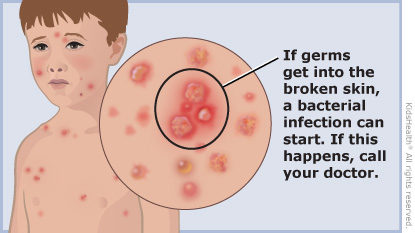
The classic chickenpox rash has three stages and all can appear on the body at the same time:
1. Red bumps: The rash starts as many small red bumps that look like pimples or insect bites. They appear in waves over 2 to 4 days.
2. Blisters: The bumps develop into thin-walled blisters filled with fluid. The blister walls break, leaving open sores.
3. Scabs: When the sores crust over, they become dry, brown scabs.
The rash usually starts on the belly or back and face. Then it spreads to almost everywhere else on the body, including the scalp, mouth, arms, legs, and genitals.
Kids also can have:
When Should I Call the Doctor?
Get medical attention right away if your child:
- has trouble breathing
- has a severe headache
- is very drowsy or has trouble waking up
- has trouble looking at bright lights
- has trouble walking
- seems confused
- seems very ill
- has a stiff neck
Call the doctor if your child:
- has a fever that lasts for more than 4 days
- has a bad cough
- has an area of rash that leaks pus (thick, yellowish fluid) or becomes red, warm, swollen, or sore
- is vomiting
Treatment & Care
How Can I Treat Chickenpox at Home?
When your child has chickenpox, rest is key. Here are some other things you can do to help kids feel better.
Soothe Itching
Here are some simple ways to help ease itching due to chickenpox:
- Prepare lukewarm baths. Have your child use cool wet cloths or soak in a lukewarm bath every 3–4 hours to help calm itchy skin, mainly during the first few days. (Baths won’t spread the rash.) Oatmeal bath products may give extra relief
- Use soft towels. After a bath, use these to gently pat skin dry. Avoid rubbing, which can irritate the rash.
- Apply calamine lotion to itchy spots, but skip the face, especially near the eyes.
- Use cream for genital sores. Ask your doctor or pharmacist which ones are right for your child.
- Ask about an over-the-counter antihistamine, taken by mouth. Your doctor or pharmacist can recommend one.
Prevent Scratching
Scratching the rash can lead to infection or scarring, so it’s important to help your child avoid it. Try these tips:
- Use soft mittens or gloves at bedtime to keep kids from scratching while they sleep.
- Keep fingernails short and clean.
Care for Mouth Sores
Blisters in the mouth can make it hard to eat and drink. Here’s how to help:
- Offer cold, soft, bland foods like smoothies, applesauce, or yogurt. You can even freeze yogurt in ice pop molds. Avoid acidic or salty items like orange juice or pretzels.
- Give acetaminophen to ease pain.
- Never give aspirin, which can cause a serious condition called Reye syndrome.
Do Medicines Help Chickenpox?
Chickenpox is caused by a virus, so antibiotics (medicines that treat infections caused by bacteria) don’t work on it. But if your child scratches the blisters and they get infected with bacteria, your doctor might recommend an antibiotic.
Sometimes, doctors also give an antiviral medicine, which treats infections caused by viruses. It’s usually for people who might get very sick from chickenpox. Whether your child needs this medicine depends on:
- your child’s age and health
- how serious the infection is
- the timing of the treatment
Your doctor can tell you if this kind of medicine is a good idea for your child.
Prevention
What Can Help Prevent Chickenpox?
To help prevent chickenpox, kids should get both:
- the chickenpox vaccine when they're 12 to 15 months old
- a booster shot (a dose to help “boost” protection) when they're 4 to 6 years old
What Precautions Can I Take for Other Family Members?
Chickenpox is very contagious (easy to catch from someone else), especially when people haven’t had it before or haven’t been vaccinated. Here are some ways to prevent chickenpox from spreading at home:
- Limit contact. Try to keep your sick child away from family members who haven’t had chickenpox or the vaccine until the rash is gone and all blisters have dried.
- Wash hands often. Everyone in your home should wash their hands often with soap and water. This helps stop the virus from passing through touch. Also, have your child avoid sharing towels, cups, and utensils with the rest of the family.
- Ask about the chickenpox vaccine. If a family member hasn’t had chickenpox or the vaccine, talk to your doctor. Getting the vaccine within 3 to 5 days after exposure can help prevent the infection or make it less serious.
What Else Should I Know?
Chickenpox spreads easily from person to person, so a child who has it should stay home until the rash is completely crusted over. At that point, the infection can’t pass to someone else.
Chickenpox goes away by itself. It takes time for the body to fight off the virus that causes the infection, so you can’t really do anything to get rid of chickenpox faster. But by keeping your child comfortable, the time spent itching and feeling ill should seem to go by more quickly.