Meatal Stenosis

What Is Meatal Stenosis?
The meatus (mee-AY-tis) is the opening in the penis where the urine (pee) comes out. In meatal stenosis (mee-AT-ul steh-NO-sis), the meatus is too small.
Meatal stenosis happens when irritation causes a scar at the meatus. This makes the opening smaller. Irritation can come from rubbing against a diaper, an injury to the penis, or having a (a plastic tube that lets the pee flow out of the body) in place for a long time. Meatal stenosis is more likely to happen in a boy who is circumcised.
A simple procedure can fix meatal stenosis. This makes the opening bigger so that the pee can come out normally.
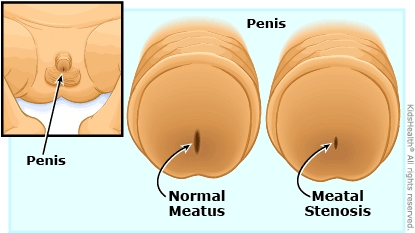
What Are the Signs & Symptoms of Meatal Stenosis?
Meatal stenosis is usually noticed when a boy starts to toilet train and has trouble aiming his pee into the toilet. Meatal stenosis can cause a boy to:
- pee upward
- need to pee a lot
- take a long time to get all the pee out
Sometimes a boy may feel burning when peeing and, rarely, may see a drop of blood in his underwear.
How Is Meatal Stenosis Diagnosed?
A health care professional will ask about symptoms and do an exam. If possible, the health care professional may watch a boy pee to see the direction of the stream. Usually, no other testing is needed.
How Is Meatal Stenosis Treated?
The treatment for meatal stenosis is called a meatoplasty(mee-AT-uh-plas-tee). This simple procedure makes the opening of the meatus bigger. It's done by a urologist, a doctor who diagnoses and treats problems with the urinary system.
Meatoplasty (also called meatotomy) fixes meatal stenosis for most boys. Simple home care will help your son heal after a meatoplasty. Talk to your health care professional if you have any questions.
Go to all follow-up visits with the urologist as recommended.
When Should I Call the Doctor?
Call the doctor if your son:
- has pain when peeing
- is finding it harder to pee
- can't pee
 Note: All information is for educational purposes only. For specific medical advice,
diagnoses, and treatment, consult your doctor.
Note: All information is for educational purposes only. For specific medical advice,
diagnoses, and treatment, consult your doctor.
© 1995- The Nemours Foundation. KidsHealth® is a registered trademark of The Nemours Foundation. All rights reserved.
Images sourced by The Nemours Foundation and Getty Images.