
Appendicitis in Kids & Teens

Overview
What Is Appendicitis?
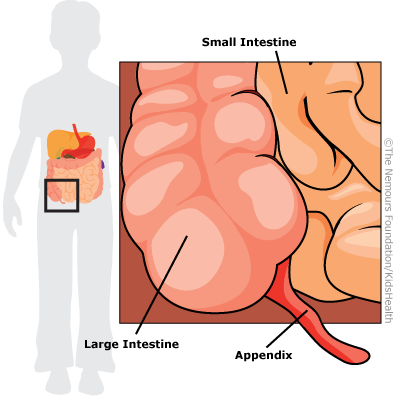
Appendicitis (uh-pen-di-SYE-tis) is when a small organ called the appendix gets blocked and becomes infected. The appendix is attached to the large intestine in the lower right side of the belly.
Appendicitis is a medical emergency. It's important to know what to look for and, if your child has any signs, get care right away.
Top Things to Know
- With appendicitis, the appendix has a blockage and gets infected.
- Belly pain that starts near the belly button and moves to the lower right side is a common sign.
- Call your doctor right away if your child has symptoms of appendicitis — it’s an emergency.
- The usual treatment is surgery, but some kids with mild appendicitis get just antibiotics.
Causes
What Causes It?
Appendicitis happens when the appendix gets blocked, letting bacteria (germs) grow. Things that might block the appendix and cause appendicitis include:
- hard, rock-like stool (poop)
- swollen lymph nodes in the intestines
- infections from things like parasites (organisms that need to live on or in a person, animal, or plant to survive), such as tapeworms
Who Gets Appendicitis?
Appendicitis mostly affects kids and teens 5–20 years old. It is rare in infants. Appendicitis is not contagious, so kids can't catch it from someone who has it.
Signs & Symptoms
What Are the Signs & Symptoms of Appendicitis?
Often, the first signs of appendicitis are a mild fever and pain around the belly button. It might seem like just a stomachache. But with appendicitis, the pain usually gets worse and moves to the lower right side of the belly.
If your child has belly pain, watch for these appendicitis symptoms:
- strong pain, mainly around the belly button or in the lower right part of the belly (the pain might come and go at first, then grow steady and intense)
- a low fever
- loss of appetite
- nausea (feeling sick) and vomiting (throwing up)
- diarrhea (especially small amounts, with mucus)
- swollen belly
Sometimes the appendix can burst (called ruptured appendicitis), which needs medical care right away. A high fever reaching 104°F (40°C) might be a sign of a burst appendix.
Call your doctor right away if you think your child has appendicitis. The sooner it's caught, the easier it will be to treat.
What Are the Complications?
An infected appendix that isn't treated is more likely to rupture. This can spread bacteria inside the body. The infection might form a large collection of pus (an abscess) or spread throughout the belly.
Diagnosis
How Is It Diagnosed?
Appendicitis can be a challenge to diagnose because its symptoms may be like those of other medical problems, such as:
To find out if your child has appendicitis, the doctor will examine the belly for signs of pain and tenderness, and order blood tests and urine (pee) tests. Some kids also get imaging tests like:
The medical team may tell you not to give your child any food or drink. This is in case your child needs surgery.
Treatment
Surgical Appendicitis Treatment (Appendectomy)
For most kids, a surgeon will operate to take out the infected appendix. This is called an appendectomy (ap-pen-DEK-tuh-me). Usually, surgeons make three small cuts in the belly and use a small device called a laparoscope (LAP-ruh-scope) to remove the appendix. Kids who get this surgery might go home the same day, though some might stay longer.
The care team may give your child intravenous (IV) fluids and antibiotics before surgery. This helps prevent problems such as an infection. Surgery can cause some pain, so kids get pain medicine if they need it.
There can be risks anytime someone has surgery and anesthesia, like infection or bleeding. But appendectomies have been done safely to treat kids with appendicitis for a long time.
Nonoperative Appendicitis Treatment (Antibiotic Treatment)
Sometimes, doctors can treat kids with early cases or very mild appendicitis using only antibiotics instead of antibiotics and surgery. With this newer way to treat appendicitis — called nonoperative treatment — kids avoid surgery and get back to regular activities sooner. They start by getting IV antibiotics in the hospital, and then take them by mouth at home for seven days.
Kids who don’t get better from the antibiotics will need an appendectomy, as will kids whose appendicitis returns.
Sometimes nonoperative treatment is also used for kids who have ruptured appendicitis. They might get antibiotics at first to treat the infection and have their appendix removed later.
Understanding Treatment Options
If your child has appendicitis, the care team will talk to you about treatment options and their benefits, risks, and possible side effects. For example, antibiotics could cause diarrhea or interfere with other medicines, like oral contraceptives (birth control pills).
What Else Should I Know?
There is no way to prevent appendicitis. But when kids get the right medical care quickly, doctors usually find and treat it without problems.
 Note: All information is for educational purposes only. For specific medical advice,
diagnoses, and treatment, consult your doctor.
Note: All information is for educational purposes only. For specific medical advice,
diagnoses, and treatment, consult your doctor.
© 1995- The Nemours Foundation. KidsHealth® is a registered trademark of The Nemours Foundation. All rights reserved.
Images sourced by The Nemours Foundation and Getty Images.