


Rocky Mountain Spotted Fever

What Is Rocky Mountain Spotted Fever?
Rocky Mountain spotted fever (RMSF) is a bacterial infection. People get it from the bite of an infected tick. Most infections happen in the spring and summer, when ticks are active.
Doctors treat RMSF with antibiotics. With prompt treatment, most people recover in a few days. If it's not treated, RMSF can be life-threatening.
What Are the Signs & Symptoms of Rocky Mountain Spotted Fever?
RMSF gets its name from the trademark rash it causes. Small red spots and blotches begin on the wrists and ankles, then spread to the palms and soles, and up the arms and legs toward the trunk.
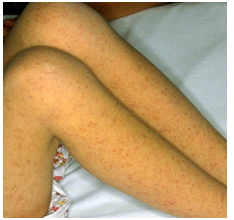
Over time, the red spots might start to look more like bruises or bloody dots or patches under the skin.
Other signs of RMSF include:
Symptoms often begin suddenly, usually within 1 week of a tick bite, though sometimes a bit later. Often, the person doesn't remember being bitten by a tick. The rash most often appears 3–5 days after the fever and headache start, but can take longer.
What Causes Rocky Mountain Spotted Fever?
Bacteria called Rickettsia rickettsia cause RMSF. Ticks spread the bacteria when they bite a person. Infections are most common in the southeastern part of the United States, but can happen in other states.
Is Rocky Mountain Spotted Fever Contagious?
RMSF isn't contagious, and can't spread from person to person. The infection spreads through the bite of an infected tick.
How Is Rocky Mountain Spotted Fever Diagnosed?
Doctors usually diagnose RMSF based on:
- the child's symptoms
- whether the child had a recent tick bite or was in an area likely to have ticks
A blood test and skin test can help diagnose RMSF, but getting the results takes time, so treatment often starts before the results are ready.
How Is Rocky Mountain Spotted Fever Treated?
Doctors treat RMSF with antibiotics. Depending on how serious the symptoms are, a person might take these by mouth or get them through an IV (intravenously). Most people recover within a few days.
An infection that isn't treated right away can cause serious health problems, which can affect the brain, lungs, heart, and kidneys. Someone with these problems may need long-lasting treatment. RMSF that isn't treated can be life-threatening.
Can Rocky Mountain Spotted Fever Be Prevented?
To help protect kids from Rocky Mountain spotted fever, follow these outdoor safety tips:
- Avoid tick-infested areas, like woods and tall grasses, brush, shrubs, and low tree branches.
- Don't sit on the ground in wooded areas.
- Use insect repellent containing 10% to 30% DEET on children and adults. Ask your doctor about insect repellents for infants and toddlers and which ones are safest to use.
- Dress in closed shoes, long sleeves, and pants when in wooded or grassy areas. Tuck the shirt into pants and the pant legs into socks to keep ticks out.
- Wear light-colored clothing so ticks are easier to see.
- Some insect repellents like permethrin are made to be sprayed on clothing. Ask your doctor about using these.
- Check children and pets for ticks when they come indoors.
Not all ticks carry the RMSF bacteria, but it's wise to remove any right away. The longer a tick stays attached to the skin, the greater the chance of infection. It usually takes several hours for a tick to spread the bacteria that cause RMSF when it's attached to the skin.
To remove a tick, use tweezers to grasp it by the head, as close to the skin as possible. Pull steadily until it comes loose. Without touching the tick, preserve it in a jar or plastic bag until you can show it to your doctor. Disinfect the bite area with alcohol, wash your hands, and call your doctor.
Check pets' skin and fur for ticks whenever they have been playing in tick-infested areas. Follow your veterinarian's advice about collars and other products that can keep your pet tick-free.
What Else Should I Know?
If your child is recovering from RMSF at home, give the antibiotics as the doctor directed. Let your child rest in bed until the fever and other symptoms are gone.
When Should I Call the Doctor?
Call the doctor if your child may have been bitten by a tick or has:
- a fever
- achiness
- a stiff neck
- headache
- a rash
 Note: All information is for educational purposes only. For specific medical advice,
diagnoses, and treatment, consult your doctor.
Note: All information is for educational purposes only. For specific medical advice,
diagnoses, and treatment, consult your doctor.
© 1995- The Nemours Foundation. KidsHealth® is a registered trademark of The Nemours Foundation. All rights reserved.
Images sourced by The Nemours Foundation and Getty Images.