Ringworm: Signs, Causes & Treatment

What Is Ringworm?
Ringworm is a type of fungal skin infection. When fungi infect the skin, they cause mild but annoying rashes. Fungal skin infections are also known as tinea infections.
When fungus grows in the area of the groin, upper thighs, and buttocks, it is called jock itch. When it grows on the feet, it is called athlete's foot.
But when fungus grows anywhere else on the body, it's known as ringworm. Its medical name is tinea capitis when it's on the scalp, and tinea corporis when it's on the rest of the body. On the nails it is known as onychomycosis.
What Are the Signs & Symptoms of Ringworm?
Ringworm on the skin starts as a red, scaly patch or bump. Over time, it may look like one or more rings with raised, bumpy, scaly borders (the center is often clear). This ring pattern gave ringworm its name, but not every infected person has it. The skin may flake, peel, or crack, and it can itch, sting, burn, or feel uncomfortable.
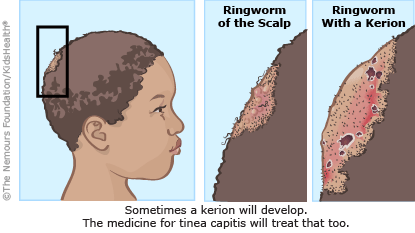
Ringworm on the scalp may start as a small sore that looks like a pimple before becoming patchy, flaky, or scaly. These flakes may look like dandruff. It can make some hair fall out or break into stubble, leaving a bald spot. It also can make the scalp swollen, tender, and red.
Sometimes, it causes a pus-filled, boggy mass known as a kerion. When the scalp is infected, it can cause swollen lymph nodes at the back of the head or neck.
Ringworm on the nails may affect one or more nails on the hands or feet. The nails may become thick, white or yellowish, and brittle.
What Causes Ringworm?
Ringworm is caused by fungi that normally live on the skin, hair, and nails called dermatophytes (pronounced: der-MAH-tuh-fites). When the environment they live in gets warm and moist, they grow out of control and start to cause symptoms.
Is Ringworm Contagious?
Yes. Ringworm can spread:
- from one person to another by skin-to-skin contact, especially in warm, damp environments
- to other areas of the body if a person touches the affected area and then touches other body parts, such as the hands
- from animals to people
How Do People Get Ringworm?
Besides spreading from person to person, ringworm can come from pets or other animals (usually cats, dogs, or rodents). It thrives in warm, moist environments such as public showers, locker rooms, or pool areas. It can spread easily when people are in close physical contact. That's why it's common in people who play contact sports such as wrestling. It can also be passed on objects like combs, brushes, hats, towels, or clothing.
Minor skin injuries (such as scratches), too much exposure to heat and humidity, and some health conditions (such as diabetes, obesity, or immune system problems) can make a person more likely to get ringworm.
How Is Ringworm Diagnosed?
A doctor can often diagnose ringworm just by looking at it and asking questions about the symptoms and your lifestyle. Sometimes the doctor will scrape off a small sample of the flaky infected skin to look at under a microscope or to test in a laboratory.
How Is Ringworm Treated?
Over-the-counter (OTC) antifungal creams, sprays, or powders may solve a mild infection. More serious infections may need prescription medicine, either topical (put on skin) or in pill/syrup form.
Ringworm on the nails or scalp usually is treated with medicine taken by mouth for 1 to 3 months. An antifungal shampoo prescribed by the doctor can help prevent the spread to other people.
Use the medicine as long as is recommended, even if the rash seems to be getting better. If not, the infection can come back and spread to other parts of the body.
To help heal the skin, it's important to keep the affected area clean and dry. You should:
- Wash and then dry the area with a clean towel. (Use a separate clean towel for the rest of your body.)
- Apply the antifungal cream, powder, or spray as directed on the label.
- Change clothing every day.
- Treat any other fungal infections, such as athlete's foot.
How Long Does Ringworm Last?
Most mild cases of ringworm usually clear up in 2 to 4 weeks. But treatment might be needed for up to 3 months if the infection is more serious, or affects the nails or the scalp.
What Can Help Prevent Ringworm?
Ringworm can't always be prevented. But to avoid it:
- Keep your skin clean and dry. Wash daily and dry completely, particularly after showering, swimming, and sweaty activities.
- Use clean towels and avoid sharing clothing, towels, combs, brushes, and hats.
- Wash sports gear and uniforms as often as possible and don't share them.
- Avoid tight-fitting clothing.
- Change your clothes every day.
- Wash your hands well with soap and water after playing with pets.
- Treat any other fungal infections, such as athlete's foot.
 Note: All information is for educational purposes only. For specific medical advice,
diagnoses, and treatment, consult your doctor.
Note: All information is for educational purposes only. For specific medical advice,
diagnoses, and treatment, consult your doctor.
© 1995- The Nemours Foundation. KidsHealth® is a registered trademark of The Nemours Foundation. All rights reserved.
Images sourced by The Nemours Foundation and Getty Images.